
Driving from the urban sprawl of New Delhi to the serene, lakeside paradise of Pokhara is one of the most rewarding road trips in South Asia. As of early 2026, improved expressways in India and evolving border protocols have made this journey more accessible, though it still requires meticulous planning.
There are certain requirements to enter Nepal from India with your own vehicle. I covered these requirements in another blog here
Your entry depends on which Nepal city you prefer to travel. If it is Kathmandu then Bihar or UP is your entry point. If you are travelling to Pokhara in west then you can enter via Sanauli border. Whereas, if you want to travel east of Nepal then Sikkim or West Bengal is your entry point.
The Gateway Choice: Selecting Your Entry Point
Nepal shares a porous border with India, but for a vehicle registered in Delhi, only three entry points are truly practical. Your choice of border will dictate your entire route.
| Border Point (India/Nepal) | Best For | Character of the Border |
| Sunauli / Belahiya | The Standard Choice. Cars and SUVs heading to Pokhara/Lumbini. | Very busy, highly commercial, and 24/7 operations. |
| Banbasa / Mahendranagar | The Shortest Route. Ideal for Bikers and light travelers. | Scenic, quiet, but has a narrow bridge with time restrictions. |
| Rupaidiha / Nepalgunj | The Adventure Choice. If you want to see Western Nepal first. | Moderate traffic, good roads on the Indian side. |
Route Analysis: Shortest vs. Longest
The Shortest Route: Via Banbasa (Western Gateway)
- Distance: ~850 km
- The Path: Delhi → Hapur → Moradabad → Rudrapur → Banbasa Border → Mahendranagar → Kohalpur → Butwal → Pokhara.
- Pros: You enter Nepal much earlier (within 350 km of leaving Delhi). The drive through the Dudhwa/Sharda region is beautiful.
- Cons: Once you enter Nepal, you must traverse the “East-West Highway” for nearly 500 km within Nepal. While scenic, the road is two-lane and can be slow due to local traffic and animal crossings.
- The Bridge Factor: The Sharda Barrage bridge at Banbasa is narrow; heavy vehicles and cars are only allowed to cross during specific hourly windows.
The Longest (but Fastest) Route: Via Sunauli (The Expressway Route)
- Distance: ~1,050 km
- The Path: Delhi → Agra (Yamuna Expressway) → Lucknow (Agra-Lucknow Expressway) → Gorakhpur → Sunauli Border → Butwal → Pokhara.
- Pros: You spend about 600 km on world-class Indian expressways. You can cover the Delhi-to-Gorakhpur stretch (~800 km) in a single day (10–12 hours) if you start at 4:00 AM.
- Cons: It is physically longer in terms of kilometers. Sunauli is a dusty, crowded border where truck queues can sometimes delay you by 1–2 hours.
- The Final Leg: From the border (Belahiya), Pokhara is only 180 km away via the Siddhartha Highway.
If you are a speed enthusiast, take Route B (via Sunauli). The expressways make the 1,000 km feel shorter. If you are a solo biker or a slow traveler looking for forests and quiet roads, take Route A (via Banbasa)
Route Overview: New Delhi to Pokhara via Sunauli Border
Embarking on a motorcycle journey from New Delhi to Pokhara, Nepal, offers an exhilarating experience through diverse terrains and cultures. Here’s an updated route plan with visual aids to guide your adventure.
- Total Distance: Approximately 1,100 km
- Estimated Riding Time: 20–22 hours (excluding breaks)
- Recommended Duration: 2–3 days for a comfortable ride
- Preferred Border Crossing: Sunauli–Belahiya (open 24/7)
Detailed Route Breakdown
Day 1: New Delhi → Lucknow (~540 km, 7–9 hours)
- Route: New Delhi → Yamuna Expressway → Agra → Lucknow Expressway → Lucknow
- Tolls: Multiple toll booths; ensure sufficient cash or FASTag balance
- Highlights:
- Agra: Home to the iconic Taj Mahal
- Lucknow: Known for its rich history and cuisine
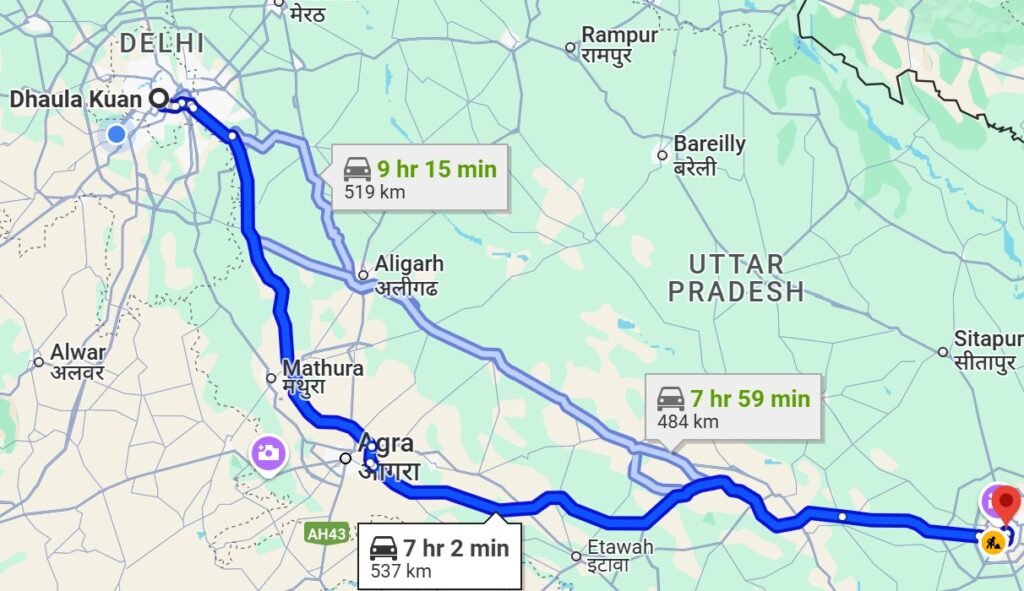
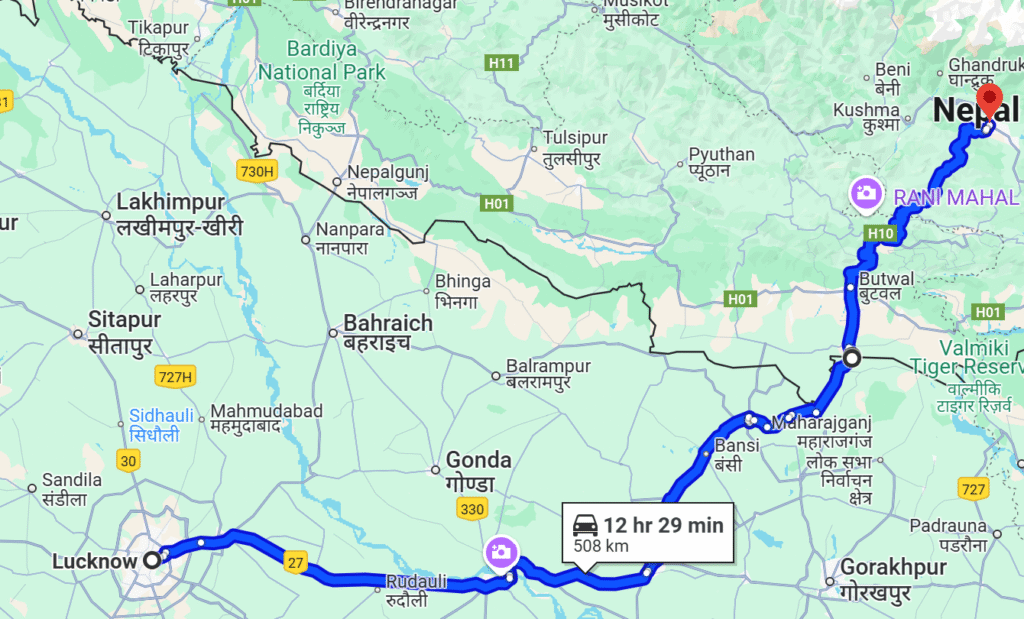
Day 2: Lucknow → Sunauli Border (~300 km, 6–7 hours)
- Route: Lucknow → Gorakhpur → Sunauli
- Road Conditions: Generally good; some stretches may have moderate traffic
- Highlights:
- Gorakhpur: Visit the Gorakhnath Temple
- Sunauli: Major border crossing into Nepal
Border Crossing at Sunauli–Belahiya
- Operating Hours: 24/7
- Requirements for Indian Riders:
- Valid driving license
- Vehicle registration documents
- Vehicle insurance papers
- Bhansar permit (vehicle entry permit)
- Bhansar Permit:
- Obtainable at the border
- Fee: Approximately NPR 150–500, depending on vehicle type
- Validity: Typically 7 days
- SIM Card:
- Consider purchasing a local SIM (e.g., Ncell) for better connectivity
Day 3: Belahiya → Pokhara (~180 km, 6–7 hours)
- Route: Belahiya → Butwal → Tansen → Pokhara via Siddhartha Highway (NH47)
- Road Conditions:
- Mountainous terrain with sharp curves
- Sections prone to landslides, especially during monsoon
- Exercise caution and check local advisories
- Highlights:
- Tansen: A picturesque hill town with rich cultural heritage
- Pokhara: Gateway to the Annapurna Circuit, known for Phewa Lake and mountain views
Essential Travel Tips for Your Journey
- Fuel Strategy: While fuel stations populate the main highways, you should top up your tank before venturing into remote or mountainous regions where stations become scarce.
- Weather Readiness: Always monitor real-time weather forecasts, particularly during the monsoon season (June–September). Heavy rains can trigger sudden landslides or road closures, making flexible planning essential.
- Overnight Stays: To ensure you remain alert and rested for the mountain roads, plan strategic overnight stops in cities like Lucknow or Gorakhpur before crossing the border.
- Health & Hydration: Pack a comprehensive first-aid kit and maintain consistent hydration to combat the physical demands of long drives and changing altitudes.
- Currency: The New Reality
- As of late 2025/2026, Nepal has legalized the use of Indian ₹200 and ₹500 notes for tourists up to a limit of ₹25,000 per person. You no longer need to carry “bricks” of ₹100 notes. However, you will still need Nepali Rupees (NPR) for local tolls and small mountain cafes.
- Connectivity
- Indian SIM cards (Airtel/Jio) work on international roaming but are expensive and slow. Buy an Ncell or Nepal Telecom (NTC) SIM at the border for ₹300; it takes 10 minutes and requires one passport photo.
- Do not drive at night in Nepal. The mountain roads lack reflectors, and “overtaking” is an art form practiced dangerously by local bus drivers. Aim to cross the border by 10:00 AM so you reach Pokhara before sunset.
Pros and Cons of the Road Trip
The Pros
- The Siddhartha Highway: The drive from Butwal to Pokhara is legendary. You’ll wind through the Mahabharat Range with the Trishuli River on one side and waterfalls on the other.
- Flexibility in Pokhara: Having your own car means you can drive to Sarangkot for a 5:00 AM sunrise or visit Begnas Lake (30 mins away) without paying exorbitant tourist taxi rates.
- The Agra-Lucknow Stretch: Cruising on the Indian expressways is a joy for any driving enthusiast.
The Cons
- Fuel Disparity: Petrol in Nepal is typically ₹15–₹20 more expensive per liter than in India. Fill your tank to the brim in Gorakhpur or Banbasa before crossing.
- The “No Horn” Policy: Pokhara and Kathmandu have strict “No Horn” zones. Indian drivers, used to honking, often face heavy fines in the first hour of entry.
- Landslides: If traveling between June and September, the roads to Pokhara can be blocked for hours.
Embark on this journey with preparation and caution, and you’ll experience the diverse beauty spanning from India’s plains to Nepal’s mountainous landscapes. Safe travels
THINGS TO DO IN POKHARA
Pokhara is often called the “Jewel of the Himalayas,” and for good reason. After the long, dusty drive from Delhi, the crisp air and the sight of the Annapurna range reflecting in the still waters of Phewa Lake are incredibly refreshing.
Top Sights and Locations
The Lakes
- Phewa Lake: The heartbeat of the city. Rent a brightly painted wooden boat (doonga) and row to the center to visit the Tal Barahi Temple, a two-story pagoda situated on a tiny island.
- Begnas Lake: Located about 30 minutes from the main lakeside, Begnas is quieter, cleaner, and less commercial. It is perfect for a peaceful afternoon or a fresh fish lunch by the water.
Sunrise & Mountain Views
- Sarangkot: A 30-minute drive from Pokhara (very convenient since you have your own vehicle). Arrive at 5:00 AM to watch the sun hit Machhapuchhre (Fishtail Mountain) and the Annapurna Massif. On a clear day, the peaks turn from ghostly white to brilliant gold.
- World Peace Pagoda (Shanti Stupa): Sitting atop Anadu Hill, this massive white stupa offers a 360-degree view of the Himalayas, the city, and the lake. You can drive up or take a boat across the lake and hike up.
- Pumdikot Religious Shores: Recently famous for the massive seated Shiva Statue, this spot is higher than the Peace Pagoda and offers even more dramatic views.
Natural Wonders
- Devi’s Falls (Patale Chhango): An unusual waterfall where the Pardi Khola stream disappears into an underground tunnel.
- Gupteshwor Mahadev Cave: Directly across from Devi’s Falls, this cave leads to a shrine of Lord Shiva. If you go deep enough, you can see the bottom of the waterfall through a damp, rocky opening.
- International Mountain Museum: Even if you aren’t a climber, this is a must-visit. It chronicles the history of Himalayan mountaineering and the culture of the mountain tribes.
Adventure & Unique Experiences
- Paragliding: Pokhara is one of the top five paragliding destinations in the world. You’ll take off from Sarangkot and glide down over the lake.
- Ultra-light Flight: A small two-seater open-cockpit plane that flies you incredibly close to the Annapurna peaks.
- Seti River Gorge: The river flows 50 meters below ground level through a very narrow gorge. You can view it from bridges near the Mahendra Pul area.
The Cuisine: A Taste of Pokhara
Pokhara’s food scene is a mix of traditional mountain soul food and high-end international “Lakeside” cafes.
Local Must-Try Dishes
- Thakali Khana (The Ultimate Dal Bhat): This is the gold standard of Nepali meals. Originating from the Thak Khola region, it includes Himalayan lentil soup, local rice, spicy greens, fermented pickles (achar), and flavored ghee.
- Where: Thakali Bhanchha or Sera Thakali in the Lakeside area.
- Juju Dhau: Known as the “King of Yogurt,” this creamy, sweet curd is traditionally served in clay pots.
- Newari Khaja Set: A platter featuring beaten rice (chiura), spicy marinated meat (choila), black soybeans, and bamboo shoot curry.
- Begnas Fish Curry: Freshly caught fish from the lake, pan-fried with local spices.
Lakeside Cafe Culture
Because Pokhara is a hub for international trekkers, the cafes are world-class.
- The German Bakery: Famous for apple strudel and fresh croissants.
- MoMo Mania: You cannot leave Nepal without eating Momos. Try the C-Momo (Chilli Momo) for a spicy kick or the Kothey Momo (pan-fried).
- Coffee: Many cafes serve locally grown organic Himalayan coffee, which is rich and less acidic than commercial beans.
Practical Tips for Driving in Pokhara
- The “No Horn” Rule: Pokhara is a strictly designated “No Horn” city. Only use your horn in extreme emergencies, or you will be pulled over immediately by the traffic police.
- Parking: The “Lakeside” road is often one-way or has restricted parking during peak hours. Check if your hotel provides secure internal parking, as the streets can get very narrow.
- Fuel: There are several petrol pumps on the Prithvi Highway as you enter the city. It’s better to refuel here than deep inside the narrow Lakeside streets.
A Suggested Evening Routine
Park your car at the hotel, walk down to the Lakeside promenade, find a cafe with live acoustic music, and watch the sunset over the water with a plate of Buff or Chicken Momos. It is the perfect way to recover from the long drive from Delhi.

