
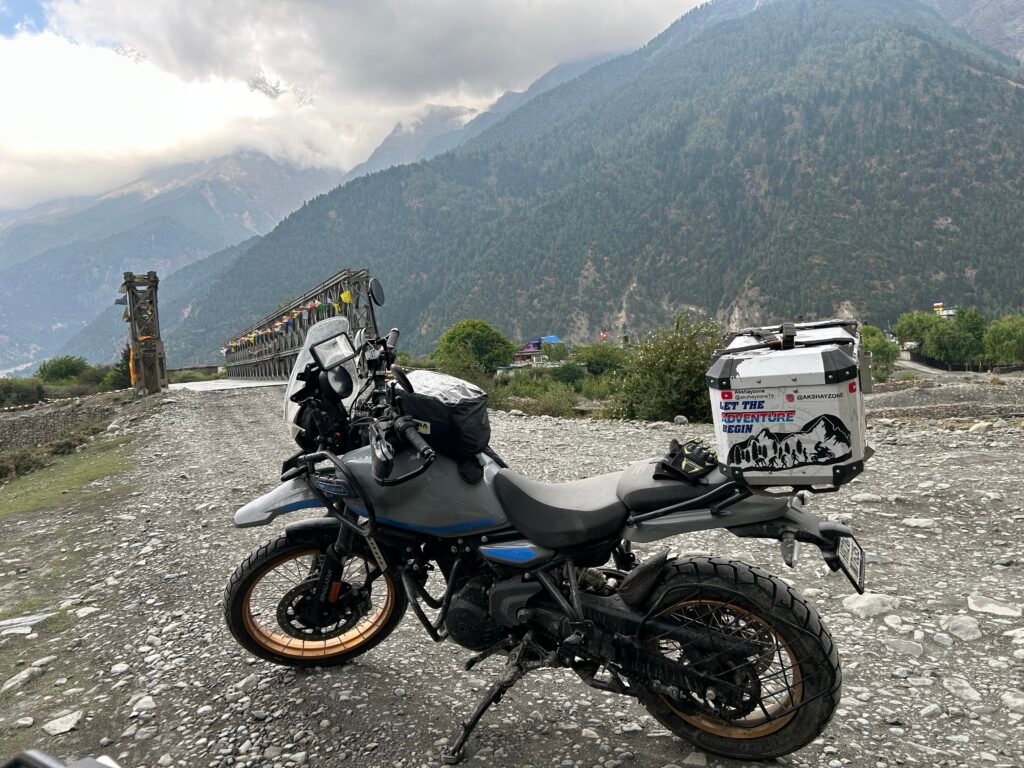
WHY NEPAL ?
We as riders are very fond of mountains, lakes, rivers and anything linked with nature. More than that, we riders love adventure. Being an adventure rider, I love mountains, not only because they are beautiful but, the adventure and thrill they offer.
With Government of India, extending national highways to Ladakh and North east, there are very few off-road and thrilling difficult roads available in India. Also, most of us have been to Ladakh countless times. We are always on the lookout for new off-roads, new mountains, difficult terrains and what if we can also get to expereince all this with a tag of International traveller.
Nepal is beautiful and adventurous but, most important it is international. Who doesn’t want to experience international. Ofcourse, there is Bangladesh, Pakistan, Srilanka, Bhutan and even China but, either it is difficult, unsafe or costly to visit these countries. Example Bhutan is charging a lot of money if one wants to travel Bhutan over their own bike.
Pakistan, Bangladesh are unsafe. Whereas as Sea is blocking us to visit Srilanka over a bike. The most welcoming, cost effective option is Nepal.
Things required to enter Nepal via road on personal bike
- Motorcycle – If you are travelling with a motorcycle or by a car in both cases, you require to carry a registeration certificate of your vehicle. The vehicle’s registration status under your name carries no weight for these procedures. But, you must have an Indian RC of the your vehicle.
- Nationality Proof – You must present a Passport or an Aadhaar card to prove your identity at the border. You must provide the original document, as a copy will not suffice. Nepal government would not keep it with them, they will return it after issuing necessary travel documents.
- Photographs – You only need passport-size photographs if you travel to nature conservation areas, such as the Annapurna Conservation Area, or any region requiring a special government permit.
- Money – You must carry Nepali currency once you enter the country. You can get INR to NPR converted on the border. There are many forex agents available, depending on the border you enter, example Sanauli border has it. While many places accept Indian currency (INR), vendors typically return change in Nepali Rupees (NPR); therefore, you should exchange your INR for NPR to ensure smoother transactions.
- SIM Card – Indian SIM does work in Nepal but, you have to put that on international roaming and that is going to cost you a lot. A better option is to buy a prepaid Nepal sim with an unlimited data plan of 7 days. If you plan to stay longer, you can recharge the sim for an additional seven days at the nearest mobile shop. Roughly, a 7 day unlimited data plan, will cost NPR 600 and a NPR 200 recharge for next 7 days.
Documents issued by Nepal government on border FOR YOUR VEHICLE
Once, you enter Nepal, you must visit Bhansar office. It is on the border. A Bhansar office provides following documents, which you must carry along with you while travelling with your vehicle.
- Bhansar – A bhansar is a type of vehicle import documents, which contains information about your vehicle, permission start date, permission end date. It is an official document which states that you are importing particular vehicle to Nepal for travelling with mentioned dates. It is mandatory to carry this document everytime you are on your motorcycle. Anybody, traffic police or general police or any other transport personnel can check and verify this while you are in Nepal.
- Road tax – It is issues along with Bhansar, and is valid for same duration. You must carry this along with Bhansar.
- Tax payment receipt – A payment receipt will be provided along with the documents. Bhansar and road tax tariffs keeps on changing therefore, it is better to check and carry enough money for your travel.
Important TipS
Safety of travel documents
When traveling through Nepal, you must prioritize the safety of your travel documents. Secure your Bhansar (customs permit) and road tax receipts in a high-quality waterproof pouch immediately upon receipt. Nepal’s mountainous terrain creates unpredictable micro-climates where heavy downpours can occur without warning. A water-damaged or illegible Bhansar is a bureaucratic nightmare; if you lose it or it becomes unreadable, you cannot rectify the issue locally. You will likely face heavy fines and undergo the hassle of traveling all the way back to the original border entry point for a re-issued permit, potentially ruining your entire itinerary.
Agents
To navigate the border efficiently, hiring a local agent is a strategic move. For a nominal fee of approximately NPR 200, an agent can handle the complex paperwork and navigate the notoriously long queues while you focus on other essentials. While they manage the red tape, you can use that time to purchase a local SIM card and exchange your currency. This small investment can save you at least half a day of frustration, allowing you to hit the mountain roads hours ahead of schedule.
Buffer Days
When applying for your Bhansar, always include buffer days. Since the border authorities only issue these permits at the point of entry, you cannot extend them once you venture deep inside the country. If you plan a seven-day trip, request a permit for nine days. While Nepal does not offer refunds for early departures, the cost of a few extra days pales in comparison to the steep daily fines and legal complications of staying past your permit’s expiry. This safety net allows you to explore hidden valleys or wait out bad weather without the constant pressure of a ticking clock.
Road Discipline
Respect local road discipline, which ranks remarkably high compared to metropolitan India. Nepalese drivers treat the road with a sense of collective responsibility: they strictly use low beams at night, avoid unnecessary honking, and maintain lane integrity with military precision. The left lane remains clear for left turns, and drivers provide clear signals for every maneuver. Nepal strictly prohibits fog lights and requires you to cover them; failing to do so triggers a police warning. Additionally, you must turn off your engine at traffic signals to reduce pollution and stop well before zebra crossings to avoid immediate fines. The Nepal Police maintain high discipline, act professionally, and usually wear full uniforms; while they might overlook a minor honest mistake from a tourist, they expect you to mirror the local culture of road safety and mutual respect.
Fuel Pumps
In the remote stretches of the Himalayas, fuel stations often defy conventional expectations. Rather than the sprawling, neon-lit plazas you see on major highways, many local pumps are incredibly modest, resembling small roadside shops or general stores. These “hidden” fuel points blend seamlessly into the village architecture and can easily go unnoticed if you are cruising at high speeds. Therefore, you must sharpen your focus and scan the roadside carefully whenever your fuel gauge dips.
Missing one of these unassuming stations could mean a long, stressful stretch without another refueling opportunity. Many of these rural vendors store fuel in barrels or manual dispensers rather than modern digital pumps, making them look even less like a traditional service station. It is a good habit to look for stacks of blue barrels or hand-painted signs that simply say “Petrol” or “Diesel” in local script. Engaging with locals in small townships is also a wise strategy; they can often point you toward a “shop” that doubles as the village’s unofficial fuel hub. By maintaining high situational awareness, you ensure that you never find yourself stranded in the silent, vast expanses between settlements.
DO I NEED A PERMIT ?
Do not confuse a Bhansar with a permit; they serve entirely separate purpose.
- Bhansar office does not issue any permit.
- The Nepal immigration office issues permits in all major cities, including Kathmandu, Pokhara, and other urban hubs.
- You must obtain a permit to travel through nature conservation areas like the Annapurna Conservation Area, Mustang, and Upper Mustang.
- Authorities will charge you a separate fee for each permit. It depends on the area like Mustang has a fee of NPR 1000 whereas Upper mustang fee is USD 500 (till 2025)
- A permit allows entry only once. You must obtain a new permit for every subsequent visit.
- Always carry your permit when visiting designated places, as officials will check and stamp it. A missing permit means no entry; if authorities catch you without one, they will fine you heavily.
- You require 2 photographs for each permit, so carry pictures accordingly.
LAST BUT NOT LEAST
While Nepal and India share deep historical and cultural roots, you will notice a significant and refreshing shift in the atmosphere once you cross the border. Nepal serves as much more than a mere neighboring country; it stands as a steadfast friend whose people embody immense warmth and a supportive nature. To preserve this unique bond, we must visit with a spirit of humility and respect. Traveling as a “gentle guest” means more than just following the law; it involves actively protecting the environment by refusing to litter and treating the pristine Himalayan landscapes with the same reverence as the locals do.
As Indian travelers, our actions directly influence the reputation of our nation. By traveling responsibly, keeping the trails clean, and demonstrating kindness to everyone we meet, we ensure that Indians remain in “Nepal’s good books” for generations to come. We should embrace a culture of mutual aid—stopping to help a fellow traveler or a local in need—because the mountains are unpredictable. You never know when the roles might flip and you find yourself relying on the grace of a stranger.
Furthermore, being a responsible citizen means respecting local customs and the quiet dignity of rural life. Whether you are navigating the narrow streets of Kathmandu or the remote trails of Zanskar and Pokhara, your attitude sets the tone for your journey. A smile, a polite “Namaste,” and a commitment to leaving no trace behind will open more doors than any currency ever could. Ultimately, we aren’t just tourists; we are ambassadors of our culture, and every interaction is an opportunity to strengthen the bridge between our two beautiful nations.

