
The High-Altitude Survival Guide: Mastering the Roof of the World
Conquering the high-altitude circuits of Ladakh, Spiti Valley, and Sikkim is a rite of passage for the modern motorcyclist. However, these are not just “road trips”; they are expeditions into an environment where the rules of physics and biology change. At elevations exceeding 10,000 feet, the air thins, the weather becomes a fickle predator, and the terrain demands absolute technical respect. This guide serves as your strategic blueprint for navigating the “Roof of the World,” ensuring you return not just with stories, but in one piece.
The Himalayan Landscape: A Different Beast
Riding in these regions is a unique experience. While infrastructure has improved with new tunnels (like the Atal Tunnel) and paved passes, the “spirit of the mountain” remains untamed.
The Three Pillars of High-Altitude Survival:
1. The Atmospheric Challenge (Thin Air) As you ascend, the partial pressure of oxygen drops. This affects two things:
- Your Engine: Carburated bikes will “choke,” and even modern fuel-injected (FI) bikes will feel a significant loss of power. You must learn to ride in lower gears to keep the RPMs in the power band.
- Your Brain: Hypoxia (oxygen deprivation) leads to slow reaction times and poor decision-making. In 2026, we emphasize “Active Monitoring”—checking in with your teammates frequently for signs of confusion or lethargy.
2. The Climate Volatility In Sikkim or Spiti, you can experience four seasons in a single afternoon. You might be navigating a humid, tropical valley at 3,000 feet, only to be hit by a blizzard at 15,000 feet two hours later.
- The Survival Rule: “Dry is warm.” If you get wet from a water crossing or rain, hypothermia can set in within minutes at high altitudes.
3. The Unpredictable Terrain The “Himalayan Highway” is a living thing. Landslides, shooting stones, and pagal nallas (crazy seasonal streams) can appear instantly. Your ability to read the road—distinguishing between “safe” gravel and “bottomless” silt—is the difference between a smooth ride and a mechanical failure.
The “Acclimatization First” Protocol
The biggest mistake riders make is rushing the ascent. The standard safety protocol is the “3,000-Metre Rule”:
- Once you reach 10,000 feet (3,048m), do not increase your sleeping altitude by more than 1,000 feet per day.
- Ride High, Sleep Low: It’s okay to cross a 17,000-foot pass during the day, provided you descend to a lower altitude (like 11,000 or 12,000 feet) to sleep.
Understanding the Heights: The Physics of High-Altitude Riding
In the world of adventure touring, “High Altitude” begins the moment you cross the 8,000 ft (2,500m) threshold. At this level, the atmosphere undergoes a fundamental shift. For a motorcyclist, this isn’t just a change in scenery—it’s a change in the chemical makeup of the air you and your engine breathe. Understanding the specific heights of these iconic destinations is the first step in respecting the challenge ahead.
The “Elevation Board”
To put your journey into perspective, here are the benchmarks for the most legendary circuits in India:
- Leh (Ladakh): ~11,500 ft (The starting point for most)
- Kaza (Spiti): ~12,500 ft (Remote and rugged)
- Gurudongmar Lake (Sikkim): ~17,800 ft (Breathtaking but oxygen-sparse)
- Khardung La: ~17,982 ft* (The classic “world’s highest” claim)
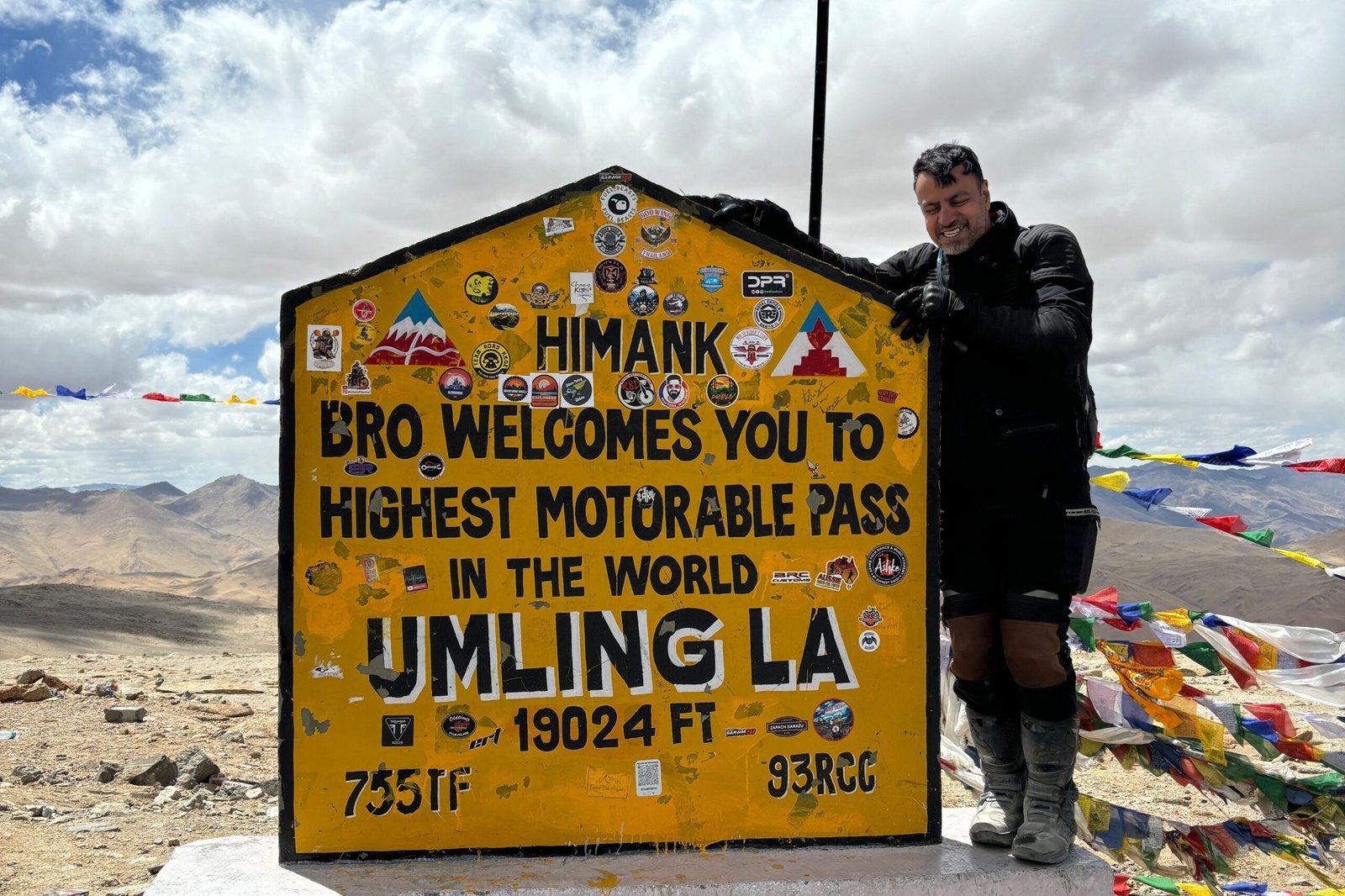
- Umling La: 19,024 ft (The current king; higher than Everest Base Camp)
*> Note: While older signs claim 18,380 ft for Khardung La, modern GPS measurements place it closer to 17,982 ft. Regardless, the air is equally thin!
Why It’s Challenging: The “Double-Edged” Effect
At these heights, the Barometric Pressure drops significantly. This creates a chain reaction:
- Lower Oxygen Concentration: Your lungs have to work twice as hard to get the same amount of oxygen into your bloodstream.
- Radical Temperature Swings: The thin air cannot hold heat. You can go from sweating in the sun to shivering in the shade within seconds.
- Metabolic Fatigue: Your body uses a massive amount of energy just to stay warm and oxygenated, meaning you tire 2–3 times faster than at sea level.
Acclimatization: Your Secret Weapon for Survival
Acclimatization is the physiological process of your body creating more red blood cells to carry oxygen. You cannot rush biology. If you ignore this process, you risk Acute Mountain Sickness (AMS), which can escalate into life-threatening conditions.
The Golden Rules of Acclimatization:
- The Gradual Climb: Once you hit 10,000 ft, try not to increase your sleeping altitude by more than 2,000–3,000 ft per day.
- The Mandatory “Leh/Kaza Buffer”: When you arrive in Leh or Kaza, do not ride on Day 1. Spend 24–48 hours resting, walking slowly, and letting your heart rate stabilize.
- Hydration is Non-Negotiable: Drink 4–5 liters of water daily. The air is incredibly dry, and dehydration mimics (and worsens) AMS symptoms.
- High-Carb, Light Meals: Your body needs “easy” fuel. Heavy, fatty meats take too much oxygen to digest. Stick to pasta, rice, and local soups (like Thukpa).
- The “Dry” Rule: Avoid alcohol and excessive caffeine. Both are diuretics that dehydrate you and can mask the early warning signs of AMS.
The Medical Protocol
Listen to the “Big Four” Warning Signs: If you experience a persistent headache, nausea, dizziness, or extreme shortness of breath while resting, descend immediately. > Important Note on Diamox: Many riders use Acetazolamide (Diamox) to speed up acclimatization. However, it is a sulfa-based drug with side effects like tingling fingers and frequent urination. Never start a Diamox course without consulting a doctor first, especially to check for allergies or pre-existing conditions.
Preparing the Machine: Tuning for the Thin Air
Just as your lungs struggle with less oxygen, your motorcycle’s engine “suffocates” as the altitude climbs. A bike that runs perfectly at sea level will likely cough, sputter, or lose significant power when crossing a 17,000 ft pass. Preparing your machine for high altitude is about optimizing respiration and reliability, ensuring that mechanical failure doesn’t leave you stranded in the sub-zero temperatures of the high desert.
The Mechanical Reality: Oxygen vs. Combustion
At high altitudes, the air is less dense. This means your engine takes in less oxygen for every stroke.
1. The Fuel System Adjustment
- Carbureted Bikes (Non-FI): These require manual “re-jetting” or tuning. You must lean out the air-fuel mixture (increase the air, decrease the fuel). If the mixture is too “rich,” the bike will struggle to idle and may stall frequently.
- FI (Fuel Injected) Bikes: Modern bikes use sensors to auto-adjust. However, physics cannot be cheated—expect a 20% to 30% drop in horsepower at 16,000+ ft. You will need to use lower gears and higher RPMs than usual to maintain momentum.
2. Vital Fluids & Controls
- Full Synthetic Oil: Switch to a high-grade synthetic oil before the trip. It maintains its viscosity better during the radical temperature shifts (from freezing mornings to engine-straining climbs).
- Brake & Clutch Integrity: You will spend hours “feathering” the clutch on technical climbs and relying heavily on brakes during steep, 20km descents. Ensure your brake pads have at least 70% life remaining and your clutch cable is fresh and lubed.
The High-Altitude Checklist
| Component | Action Plan |
| Air Filter | Clean it daily. Mountain trails are incredibly dusty. A clogged filter starves an already oxygen-deprived engine. |
| Tyre Pressure | Check daily. Pressure fluctuates with both altitude and temperature. A tyre at 32 PSI in the valley might feel rock-hard or dangerously soft after a 5,000 ft climb. |
| Tyre Setup | Use Tubeless Tyres if possible. They are easier to repair on the road. If using tubes, carry two sets of spares (front and rear). |
| Chain Maintenance | Clean and lube every evening. The river crossings and grit of Spiti/Ladakh act like sandpaper on your drivetrain. |
Pro-Tip: The “Remote Area” Spares Kit
In places like the Changthang Plateau or the Zanskar Valley, specialized spare parts are non-existent. At a minimum, every rider should carry:
- Spare Clutch & Accelerator Cables (pre-routed if possible).
- Spare Spark Plug.
- Brake Pad Set.
- Heavy-duty M-Seal or Cold Weld (for punctured engine cases).
The “Breath” Rule
If your bike starts to struggle on a steep incline, don’t just pin the throttle. This will only overheat the engine. Instead, stop, let the bike idle for a minute, and try to find a rhythm in a lower gear. Remember: the mountain always wins a test of strength; you must win with a test of patience.
What to Carry on a High-Altitude Ride
Rider Essentials:
- Thermal base layers
- Insulated riding jacket and pants
- Balaclava, neck gaiter
- Warm gloves (preferably waterproof)
- UV-protective sunglasses or goggles
- Rain gear (weather changes fast)
- Electrolyte powders & dry fruits
Survival & Utility Kit:
- Oximeter to monitor blood oxygen levels
- Portable oxygen canisters
- Basic meds (Diamox, paracetamol, Digene, etc.)
- Thermal flask (for hot water or tea)
- Headlamp/torch
- Phone with offline maps
- Solar power bank
In winter and shoulder seasons (April, Oct), carry snow chains or avoid late evenings altogether.
Riding Techniques for High Altitude
- Ride slow and steady: High revving stresses both bike and body.
- Use engine braking on descents: Prevents brake overheating.
- Shift weight appropriately: Especially on sandy, rocky or slushy patches.
- Stay in lower gears on steep climbs.
- Avoid standing water and slush: You never know what’s beneath.
- Never ride solo in remote zones like Hanle or Zanskar without informing someone.
How to Handle Acute Mountain Sickness (AMS)
Symptoms:
- Persistent headache
- Nausea
- Fatigue
- Shortness of breath
- Loss of coordination
What To Do:
- Descend immediately by 1,000–2,000 ft.
- Take oxygen if available.
- Rest and hydrate—do not push forward.
- Seek local medical aid at army camps or health centers in Leh/Kaza/Tawang.
Never ignore AMS — it can escalate into life-threatening HAPE or HACE.
Popular High-Altitude Routes (with Key Altitudes)
| Route | Max Altitude | Notes |
|---|---|---|
| Leh – Hanle – Umling La | ~19024 ft | Acclimatize in Leh/Hanle |
| Manali – Leh – Khardung La | ~18,300 ft | Acclimatize in Keylong/Sarchu |
| Manali – Jispa – Shinkula Top | ~16,580 ft | Acclimatize in Manali/Jispa |
| Shimla – Spiti – Kaza – Manali | ~14,900 ft | Kunzum La is steep and often snowy |
| Gangtok – Nathula – Gurudongmar | ~17,800 ft | Permits needed, oxygen is low |
| Srinagar – Leh – Nubra | ~18,000 ft | Easier acclimatization from Srinagar |
Permits & Legal Requirements
- Inner Line Permits (ILP): While the ILP requirement is gone, Indian citizens still need to pay an environment fee (Rs 300) and a Red Cross fund fee (Rs 100). These fees can be paid online through the Ladakh Tourism website. To visit Sikkim, both Indian and foreign nationals need to obtain specific permits. Indian citizens need an Inner Line Permit (ILP) and foreign nationals need an ILP and Protected Area Permit (PAP) for certain areas.
- Check post registration: Compulsory at multiple Army/ITBP locations. An ID like Aadhaar, passport or Driving License is required.
- Bike papers, ID proof, and license must be readily available and is required to be shown at points like south pulu while going towards Khardung La.
Use websites like Ladakh District Permit Site or Sikkim PAP Portal for updated rules.
Final Tips for High-Altitude Motorcycling
- Start early, stop early – Avoid night riding at all costs.
- Respect local advice – Locals know when landslides or snowfall is due.
- Fuel up wherever possible – Petrol pumps are sparse.
- Inform someone about your route each day.
- Don’t underestimate the terrain – even veteran riders face surprises.
Final Words
Riding at high altitudes is a test of endurance, planning, and respect for nature. With the right mindset, preparation, and equipment, it becomes one of the most rewarding riding experiences on Earth. From the silence of Spiti to the winds of Khardung La, each turn is a story worth living—if you ride responsibly.
I hope this comprehensive guide has provided you with the clarity and confidence needed to kickstart your motorcycling journey. My goal is to help you navigate the steep learning curve of the road so you can focus on what truly matters: the joy of the ride.
If you found these insights helpful, there is much more to explore. From deep dives into specific gear reviews to tactical route planning and advanced riding techniques, I’ve curated a wealth of knowledge to keep you moving forward.
Take the Next Step: For more expert tips, gear breakdowns, and adventure stories, be sure to explore our full library of resources on the Guides Page and Blogs Page.
Related Posts
Motorcycle Types Explained: Find Your Perfect Ride
As you stand at the threshold of the motorcycling world,…
The Great Debate: Solo Exploration vs. Collective Adventure
Motorcycle touring is a deeply personal endeavor, often serving as…
Hydration on Two Wheels: Water Bottle vs. Hydration Bladder
If you primarily travel by car, the choice is simple:…