Beginner’s Guide to Motorcycling
Stepping into the world of motorcycling is a transformative milestone—a rite of passage that offers a sense of liberation unlike any other. However, it is natural to feel a mixture of high-octane excitement and a touch of intimidation. The learning curve can feel steep, but every veteran rider once stood exactly where you are today. This guide is designed to bridge that gap, providing you with the foundational knowledge, technical insights, and practical wisdom needed to transition from an aspiring enthusiast to a safe, confident, and skilled rider.
More Than Just a Ride
Motorcycling is a skill that demands respect, focus, and a commitment to continuous learning. It is an “active” form of travel where you are part of the environment, rather than just an observer behind a windshield. To ensure your journey starts on the right track, we will break down the complexities of gear, machine selection, and road philosophy into manageable, actionable steps.
What this guide offers you:
- Clarity: Cutting through the jargon to understand what equipment and motorcycles truly matter.
- Safety: Prioritizing the “Golden Rules” that protect you while you build your skills.
- Confidence: Equipping you with the “Pro Tips” that usually take years of trial and error to learn.
The Beginner’s Mindset
In the world of two wheels, “Slow is smooth, and smooth is fast.” Your first few months are about developing muscle memory and road scanning habits. Don’t rush the process; the goal is to enjoy the thrill of the ride while ensuring you come home safely every single time.
Step-by-Step Beginner’s Guide
Step 1: Understanding the Commitment
Before you ever thumb the starter button, it is vital to recognize that motorcycling is far more than a simple alternative to driving—it is a profound lifestyle commitment. Unlike a car, which offers a “passive” experience protected by a steel cage, a motorcycle demands an “active” partnership. You are trading the insulation of a cabin for the raw exhilaration of the open road, which brings a heightened level of personal responsibility. Every ride requires your full presence, physical coordination, and a disciplined approach to safety.
The Three Pillars of the Rider’s Mindset
To transition successfully from a driver to a rider, you must internalize three critical shifts in perspective:
1. The Invisibility Factor (Proactive Defense)
In a car, you are a large, metallic presence; on a bike, you are a small silhouette that easily gets lost in blind spots or “visual noise.”
- The Mindset Shift: Never ride with the assumption that you have been seen. You must operate under the “Assume You Are Invisible” rule. Always maintain a “buffer zone” in traffic, avoid staying in a vehicle’s blind spot, and constantly scan for drivers who might turn across your path.
2. The Dynamic Involvement (Physical & Mental)
Driving a car is largely a sedentary task; riding a motorcycle is an athletic one.
- The Mindset Shift: You are the primary stabilizer of the machine. Riding requires a unique harmony of hand-eye coordination (managing the clutch, throttle, and brakes simultaneously), core strength (to maintain posture and grip), and unwavering mental alertness. You cannot “zone out” on a bike; your brain must be constantly processing road surface, wind conditions, and traffic patterns.
3. The Maintenance Discipline (Mechanical Vigilance)
A minor mechanical failure in a car (like a soft tire or a loose chain/belt) might result in a roadside stop; on a motorcycle, it can lead to a loss of control.
- The Mindset Shift: You must become your own primary safety inspector. This involves the T-CLOCS approach—a daily ritual of checking Tires, Controls, Lights, Oil/Fluids, Chassis, and Stands. Being aware of your bike’s health isn’t a chore; it’s a survival skill.
Step 2: Choosing Your First Motorcycle
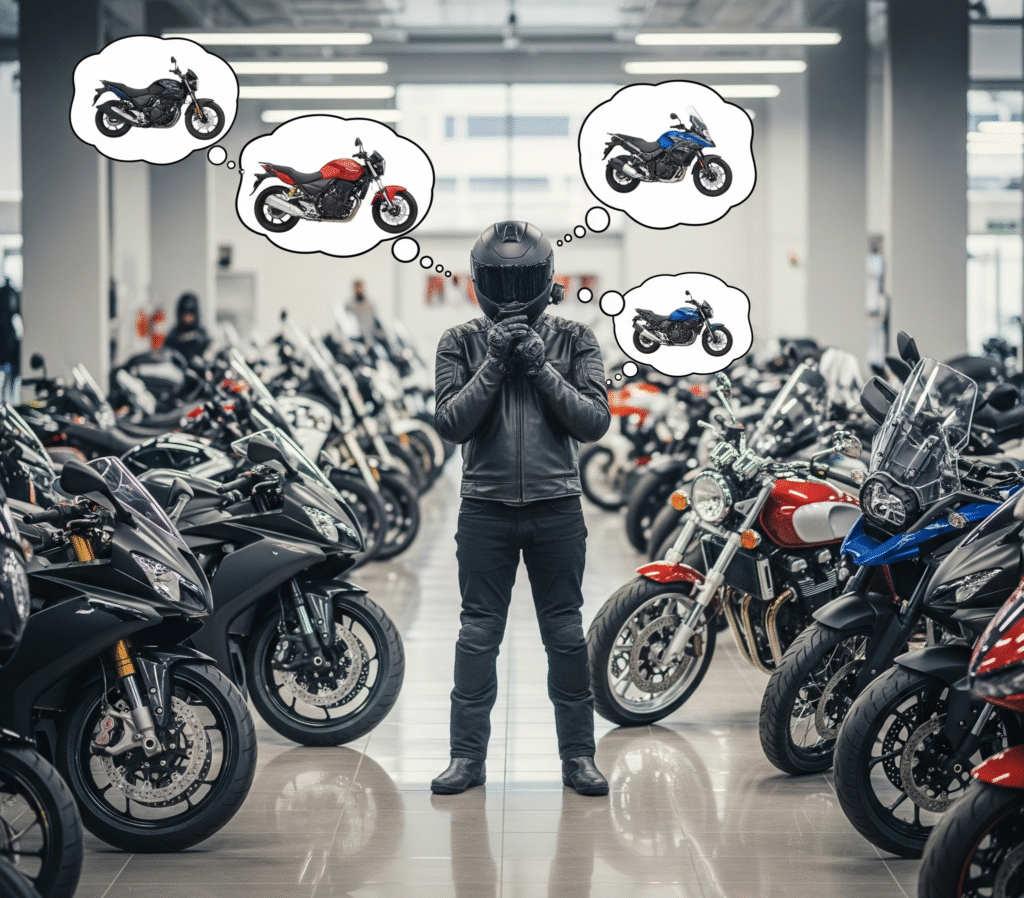
Selecting your first motorcycle is arguably the most influential decision of your early riding career. The “perfect” beginner bike isn’t the one that looks the fastest in a poster; it is the one that allows you to build skill without intimidation. A motorcycle that is lightweight, mechanically forgiving, and easy to maneuver will accelerate your learning curve. If a bike is too heavy or powerful, you’ll spend your energy managing the machine rather than learning the road.
Step 2: Choosing Your First Motorcycle
The Rephrased Core: Selecting your first motorcycle is arguably the most influential decision of your early riding career. The “perfect” beginner bike isn’t the one that looks the fastest in a poster; it is the one that allows you to build skill without intimidation. A motorcycle that is lightweight, mechanically forgiving, and easy to maneuver will accelerate your learning curve. If a bike is too heavy or powerful, you’ll spend your energy managing the machine rather than learning the road.
The Beginner Sweet Spot: 125cc to 500cc
In the current market, the 125cc to 500cc range offers the best balance of manageable power and highway capability. These engines provide enough “zip” to keep you safe in traffic without the overwhelming torque of a liter-bike.
Top Recommendations for New Riders:
- The Precision City-Slicker (Honda CB300R): Exceptionally lightweight with premium build quality. Its “Neo-Sports Café” design makes it easy to flick through traffic while remaining very beginner-friendly.
- The All-Terrain Hero (Hero Xpulse 200 4V / 210): The gold standard for versatility. It is light, budget-friendly, and handles potholes or dirt trails with ease—perfect if you plan on exploring beyond the pavement.
- The Streetfighter (KTM Duke 200): If you crave sharp handling and a sporty feel, the Duke provides a thrilling but manageable introduction to performance riding.
- The Relaxed Explorer (Royal Enfield Meteor 350): With its low seat height and smooth “thumping” engine, this is the ultimate choice for those who want classic cruiser comfort and easy low-speed handling.
Tactical Buying Tips
- Prioritize Seat Height: If you are shorter in stature, a low seat height is a massive confidence booster. Being able to plant both feet firmly on the ground at a stoplight prevents “tip-over” anxiety.
- The “Used” Advantage: Your first bike is a learning tool. Statistics show that most new riders will experience at least one minor drop or scratch in their first year. Buying a pre-owned motorcycle saves you from the painful depreciation of a new machine and reduces the “stress” of that first inevitable scratch.
- The Comparative Test: Visit multiple dealerships. Sit on the bikes, feel the weight, and check the reach to the bars. Never buy a bike without at least feeling its ergonomics in person.
Regional Insight: Navigating the Indian Market
If you are riding in India, you are in one of the most vibrant motorcycle markets in the world. Cities like Delhi, Pune, and Bangalore have massive ecosystems of riding schools and second-hand dealers.
- The Karol Bagh Dilemma (Delhi): While Karol Bagh is a legendary hub for used motorcycles, it is a “buyer beware” environment. You can find incredible deals, but only if you are vigilant.
- Verification is Key: When buying used, always verify the service history and RTO (Regional Transport Office) records. Check for frame damage, engine leaks, and tire wear.
- The Trust Factor: The safest way to buy a first bike is from a trusted friend or a known contact. Knowing how the bike was treated and serviced is worth more than a slightly lower price tag from a stranger.
Step 3: Get Proper Training & Obtain Your License
The transition from “owning a motorcycle” to “being a rider” happens in the training lot. While it is tempting to have a friend teach you in a vacant parking lot, professional training is the only way to build a foundation of correct habits rather than “inherited mistakes.” A formal course doesn’t just prepare you for a test; it installs the muscle memory required to handle a crisis. In many regions, completing an accredited program is not just a safety choice—it’s a legal shortcut that can waive certain exams or lower your insurance premiums.
Global Gold Standards in Training
Depending on where you are starting your journey, look for these recognized programs:
- In India: Enroll in RTO-approved Motor Driving Training Schools (MDTS). Many accredited centers (like those in Delhi, Pune, and Bangalore) are authorized to conduct training that can bypass the traditional RTO skills test.
- In the US/Canada: The Motorcycle Safety Foundation (MSF) “Basic RiderCourse” is the industry standard. It provides the bike and the helmet, and successful completion often waives the DMV riding test.
- In the UK: Compulsory Basic Training (CBT) is the mandatory first step. It ensures you have a basic level of competence before you are even allowed to display “L” plates on a 125cc machine.
What the “Pro Curriculum” Covers
Professional instructors focus on the “Hidden Skills” that beginners often ignore:
- The “Slow-Speed” Mastery: Learning to balance a heavy bike at walking speeds using “friction zone” clutch control and the rear brake.
- Emergency Braking: How to apply maximum stopping power without locking the wheels or “high-siding” the bike.
- Obstacle Avoidance: Mastering the “Counter-Steer”—the physics of pushing the handlebar to flick the bike away from a sudden hazard.
- Lane Discipline & Scanning: Developing the “Eyes of a Rider” to predict traffic patterns 10 seconds before they happen.
The License Roadmap (India Focus)
In India, the process is streamlined but requires a mandatory waiting period to ensure you actually practice:
- Learner’s License (LL): Apply online via the Parivahan Sewa portal. You’ll take a computer-based test on road signs and traffic rules. Once issued, it is valid for 6 months.
- The 30-Day Practice Phase: You must hold your LL for at least 30 days before you can apply for a Permanent License. This is your window to enroll in a school and practice under supervision.
- Permanent License (PL): Book a slot for your “Driving Test” at the RTO. You will be required to ride a “Figure-8” and demonstrate gear shifts and balance. Once passed, your license is delivered to your home.
Pro Tip: The “Insurance Discount” Hack
Before you buy your first insurance policy, mention that you have completed a certified safety course.
- The Benefit: Many insurance providers view trained riders as “Lower Risk.” Showing your certificate of completion can often slash your annual premium by 10% to 15%, effectively paying for the cost of the training course itself over the first year or two.
Step 4: Gear Up Smartly
Never compromise on safety. Invest in the following protective gear:
| Gear Item | Description | Cost Estimate (INR) |
|---|---|---|
| Helmet | ISI/DOT/ECE certified full-face helmet | ₹1,500–₹6,000 |
| Jacket | Abrasion-resistant, armored for shoulders, elbows, back (prefer L2 level) | ₹3,000–₹12,000 |
| Gloves | Padded, knuckle-protected full-finger gloves | ₹1,000–₹3,000 |
| Pants | Reinforced riding pants or jeans with knee guards (prefer L2 level) | ₹3,000–₹7,000 |
| Boots | Over-the-ankle with firm soles | ₹2,500–₹6,000 |
Regional Tip: Quality riding gear brands available in India include Rynox, Solace, Tarmac, and Raida. Check local showrooms or online portals like PlanetDSG or Amazon India. If it is too much to invest in the beginning then least yu can buy Arm and Knee protector in place of jacket and pant.
Step 5: Road Awareness & Skills Development
Before You Hit Traffic:
- Practice in open parking lots or gated communities.
- Learn slow-speed maneuvers, balance control, and figure-8 turns.
Road Tips for New Riders:
- Avoid riding in rain or fog until you’re experienced.
- Use high-visibility clothing and reflective gear.
- Keep a 3-second distance from vehicles ahead.
Pro Tip: Always do a TCLOC Check:
- Tires & Wheels
- Controls (brakes, throttle, clutch)
- Lights
- Oil & fluids
- Chassis
Step 6: Legal Documents & Insurance
Always carry:
- Driving License
- Registration Certificate (RC)
- Pollution Under Control (PUC) Certificate
- Insurance (Third-party minimum, Comprehensive preferred)
Insurance Cost Estimate: ₹800–₹2,500 annually (for beginner motorcycles)
Regional Advice: Visit IRDA-approved insurance providers such as ICICI Lombard, Digit, or HDFC Ergo for quick online policy issuance.
Step 7: Practice, Then Explore
Avoid: Long highway trips or group rides initially. Start with:
- Early morning city rides
- Short countryside rides (50–70 km round trips)
Essential Tools to Carry:
- Mini tool kit
- Tyre inflator or foot pump
- Phone holder with maps
- Chain lube and microfiber cloth
Regional Tip: In Indian states like Himachal Pradesh or Uttarakhand, make sure your motorcycle complies with emission norms and that helmets are mandatory for pillions as well.
When You’re Ready to Upgrade
Once you’re confident and experienced:
- Touring Riders: Try Royal Enfield Himalayan, Honda NX500
- Adventure Riders: Check KTM Adventure 390, BMW G310 GS
- Cruising Enthusiasts: Royal Enfield Interceptor 650 or Meteor 650
Used bikes from trusted dealerships can also be a smart choice.
Printable Beginner’s Rider Checklist
✅ Full-face Helmet (ISI/DOT certified)
✅ Riding Jacket with Armor
✅ Riding Gloves
✅ Riding Boots
✅ Valid License & Registration
✅ Bike Insurance (Comprehensive preferred)
✅ Tool Kit, PUC Certificate
✅ Fuel Level Checked
✅ Tire Pressure & Chain Lubed
✅ Pre-ride Brake and Light Test
By following this step-by-step beginner’s guide, you’re not just buying a bike—you’re joining a global brotherhood of riders. Stay alert, be responsible, and enjoy the sense of freedom only two wheels can provide.
I hope this comprehensive guide has provided you with the clarity and confidence needed to kickstart your motorcycling journey. My goal is to help you navigate the steep learning curve of the road so you can focus on what truly matters: the joy of the ride.
If you found these insights helpful, there is much more to explore. From deep dives into specific gear reviews to tactical route planning and advanced riding techniques, I’ve curated a wealth of knowledge to keep you moving forward.
Take the Next Step: For more expert tips, gear breakdowns, and adventure stories, be sure to explore our full library of resources on the Guides Page and Blogs Page.
Related Posts
Hydration on Two Wheels: Water Bottle vs. Hydration Bladder
If you primarily travel by car, the choice is simple:…
How to Prepare for a Motorcycle Road Trip
A successful motorcycle expedition is won or lost long before…