Welcome to the second blog of the Zanskar series, in my first blog ZANSKAR-THE HIDDEN INDIA-SHINKULA TO PADUM, I talked about route 1 via Shinkula top.
The route from Shinkula top is risky and at times un-available due to snow. However, if you planning to discover Zanskar this is not the only route. There are few more routes available, however, not all are safe.
ROUTE 2 – DELHi-KARGIL TO PADUM
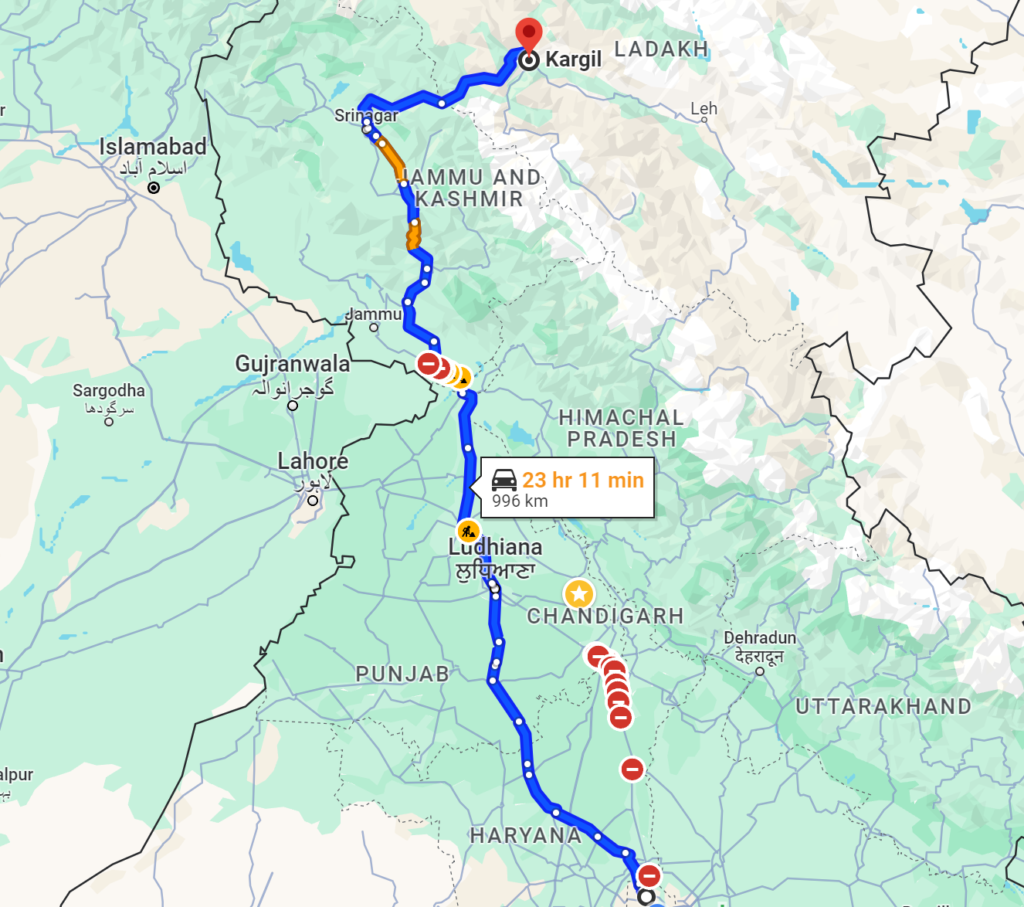
If you decide to launch your expedition from the Manali side, the journey from Delhi to Darcha covers approximately 660 kilometers. However, if that high-altitude pass is closed or if you prefer the more gradual ascent through the Srinagar side, the distance from Delhi to Kargil stretches to nearly 990 kilometers.
This creates a massive discrepancy of over 330 kilometers, a gap that translates into significantly more time in the saddle, higher fuel consumption, and at least one extra day of transit. Despite the added distance, the Srinagar-Kargil highway remains a legendary lifeline. Before the Border Roads Organization (BRO) developed the Shinku La route, this northern arc was the only official way to access Padum and the Zanskar Valley.
Choosing the longer Srinagar route isn’t just about distance; it’s a strategic trade-off. While it adds 330 kilometers to your odometer, it offers a much gentler acclimatization process compared to the sudden, brutal elevation gain of the Manali-Leh highway. For decades, riders had no choice but to commit to this marathon journey, winding through the lush valleys of Kashmir and over the formidable Zojila Pass just to reach the gates of Zanskar. Today, while the Shinku La “shortcut” exists, the Kargil route remains a favorite for those who want to witness the dramatic transition from the green meadows of the valley to the stark, lunar landscapes of the high desert.
KARGIL to PADUM
After covering the long haul from Delhi to Kargil—a journey spanning nearly 1,000 kilometers—you reach the historic gateway to the Zanskar Valley from the northwest. From this vantage point, the final push to Padum covers approximately 230 kilometers. When compared to the alternative route via Shinku La, where the distance from Purne to Padum is a mere 125 kilometers, the geographic contrast becomes striking.
However, the math is not as simple as it appears. While the Shinku La route is significantly shorter, the direct link from Purne to Padum remains officially under construction, often forcing riders onto unfinished, technical tracks. Yet, when you calculate the total journey from Delhi, choosing the Kargil approach adds a staggering 500 kilometers to your odometer. This massive distance creates a logistical hurdle that many modern adventure riders are unwilling to clear.
This explains why the majority of travelers now prefer the high-risk, high-reward Shinku La route despite its treacherous reputation. Most riders would rather wrestle their machines over a 16,500-foot pass and navigate deep mud than endure an extra two days of highway riding through Kargil. The allure of the “shortcut” is powerful, especially when it saves hundreds of kilometers of fuel and physical fatigue. While the Kargil road is more established, the sheer efficiency of the Shinku La connection—even with its dangerous inclines and unpredictable weather—has made it the new favorite for those looking to reach the heart of Zanskar as quickly as possible.
Kargil to SANKOO
Even if the distance if quite long, still the route from Kargil to Padum has a lot to offer and all that is worth travelling via this route.

After departing from Kargil and venturing deeper into the wilderness, your first major landmark is the town of Sankoo. This vibrant settlement serves as the gateway to the legendary Suru Valley, one of the most fertile and visually stunning regions in all of Ladakh. During our expedition, we arrived as the sun was dipping below the horizon, casting long shadows across the rugged terrain. Because nightfall was fast approaching, we decided to set up camp at Karphokar, a serene spot located just on the outskirts of Sankoo as you head toward the heart of the valley.
For those following in our footsteps, this area offers versatile accommodation options. If you prefer a roof over your head and a taste of local hospitality, you can choose from the numerous charming homestays within Sankoo. However, if you crave a night under the stars, the riverside near Karphokar provides a dramatic setting. The geography here is breathtakingly symmetrical; on one side, the pristine Suru River rushes through the valley floor, its glacial waters humming a constant tune, while on the other, colossal, snow-draped glaciers hang precariously from the mountain peaks.
Spending a night here is essential for acclimatization and mental preparation. As you sit by your campfire or on a homestay porch, you are sandwiched between the lush greenery of the valley floor and the frozen giants above. The air is crisp and carries the scent of wild herbs and cold stone. It is the perfect place to pause and reflect before the road ahead becomes significantly more demanding. Whether you choose the comfort of a local home or the ruggedness of a tent, the view of the starlit glaciers reflected in the river is a memory that will stay with you long after you leave the valley.
SURU VALLEY – NUN and KUN PEAKS
The next jewel on this itinerary is the illustrious Suru Valley, arguably the most picturesque camping destination in the entire region. This valley is world-renowned for its dramatic contrasts—vibrant green meadows set against the backdrop of massive, prehistoric glaciers and the turquoise ribbon of the Suru River. For those who prefer more established comforts over a tent, the area offers a selection of cozy homestays and a few boutique resorts that provide a surprisingly pleasant stay amidst such a rugged wilderness.
The true highlight of this stretch is the breathtaking reveal of the Nun and Kun mountain massifs. Standing at 7,135 meters and 7,077 meters respectively, these twin peaks dominate the skyline, their jagged, ice-clad summits piercing the clouds. If your schedule allows for more than just a ride-through, the valley serves as the base camp for trekking expeditions toward these giants. Even a short hike into the foothills offers a perspective of the Himalayas that most travelers never get to see.
I cannot recommend this detour highly enough. Even if your ultimate destination isn’t the Zanskar Valley, the Suru Valley warrants a dedicated visit. Since it lies only about 90 kilometers from Kargil, it makes for an exceptional day trip. You can ride out in the morning, spend the afternoon picnicking by the glacial streams under the shadow of Nun Kun, and return to Kargil by sunset. However, once you experience the valley’s serene silence and the way the golden hour light hits the glaciers, you will likely find it very difficult to leave.
Rangdum
After you leave the emerald landscapes of the Suru Valley and the towering sentinels of Nun and Kun behind, the road snakes upward into the rugged highlands. These winding mountain tracks lead you toward one of the most spiritually significant landmarks in the region: the Rangdum Gompa. Perched atop a small hill like a fortress of faith, this ancient monastery stands near the isolated Rangdum village, acting as a bridge between two worlds.
Established between 1753 and 1782, the monastery occupies a unique geographical and cultural niche. While it sits physically within the boundaries of the Suru Valley, its heart and soul are purely Zanskari. Culturally, it marks the transition from the Islamic influence of Kargil to the ancient Tibetan-Buddhist traditions of Zanskar. Even though you are riding through a wide, flat valley floor, don’t let the horizon fool you—you are operating at a staggering altitude of 4,031 meters (13,225 ft). This elevation makes the air thin and crisp, adding a layer of ethereal silence to the monastery’s surroundings. If you plan to explore its prayer halls and ancient murals, keep a close eye on the clock; the monks typically close the monastery doors around 5:00 PM during the summer months.
By this point in the journey, you have covered roughly 130 kilometers from Kargil. On a continuous ride, this stretch takes between 3 to 4 hours, but with the sensory overload of Sankoo, the Suru Valley, the Nun-Kun massifs, and the Rangdum Gompa, you will likely find yourself stopping frequently for photographs. This route is undeniably long and demanding, but the sheer density of discovery is unparalleled. Every kilometer reveals a new layer of history or a hidden pocket of scenic beauty that makes the fatigue of the road disappear. You aren’t just traveling a distance; you are moving through a living gallery of the Himalayas.
Pensi La top- Drang Drung GLACIER
Officially, Pensila is the doorway to Zanskar valley from Kargil side, which is almost 25 Kms from Rangdum. This is one route which will provide you the most scenic as well as cinematic experience.

Pensila offers view of the glacier range of Nun, Kun, Drang Drung and so on. Glaciers are so close to you that you would even want to just run and climb up to them. However, that is possible in some cases like Nun, Kun and Drang Drung.
Drang Drung offers a 23 Kms trek of it own, which one must plan in his/her lifetime. It is probably one of the largest glaciers after Siachen, with an average elevation of 4,780 m (15,680 ft). The Drang-Drung Glacier is a long river of ice and snow, a source of the Stod River,[2] a tributary of the Zanskar River, itself a tributary of the Indus River.
Pensila to Padum
Once you witness the Drang Drung from Pensila, your heart won’t easily let you leave this place. However, the journey must continue. Our destination in this journey is just 80 Kms from this place and mostly going down hill.
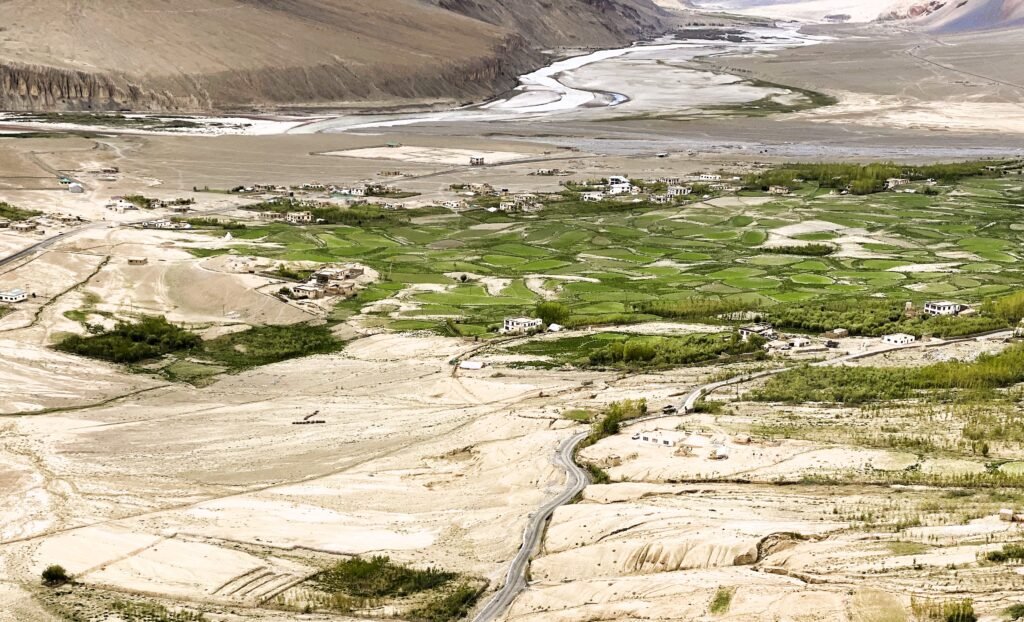
Once you descend from Pensila, there will be straight road for around 30-40 Kms. Road is under construction so you may encounter certain bad patches. There are very few stoppage points.
Once you start to reach near to Padum you will witness the first fuel station just 5 Kms ahead of Padum. So far, Padum is a small town but soon it will be like Leh as it has the beauty, sites and accessibility on offer.
Only limitation is the reachability which is getting better with time and soon within 2-3 years we may have roads like Leh leading towards Padum.
I will write a seperate blog only for Padum as this place has a lot to offer for passionate travellers like us. However, I have shared a glimpse of it in my previous blog, so do check that out.
Checkout Zanskar ride videos on my youtube channel – Zanskar Ride
Subscribe my youtube channel for stories of such adventurous trips – Subscribe
For latest travel plans and updates, follow me on Instagram – Follow
Related Posts