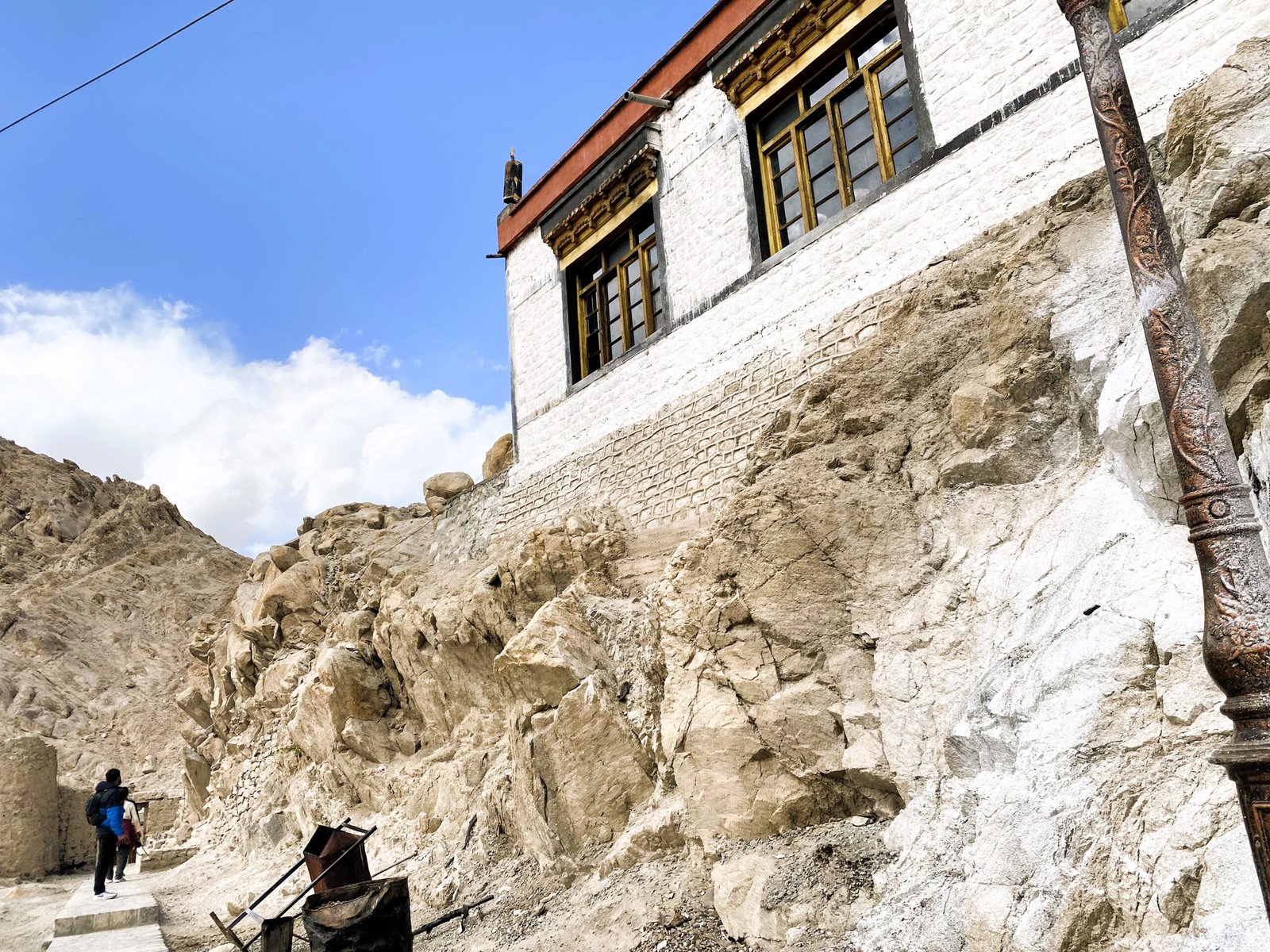
While Ladakh remains my quintessential adventure destination, I recently discovered a hidden sanctuary teeming with the ancient footprints of Indian civilizations. This majestic, raw landscape feels like a world lost in time, tucked away from the frantic pace of metropolitan life. This place is Zanskar—a rugged valley that serves as a living museum of history.
Because Zanskar shares borders with both Ladakh and the Kargil district, travelers often find themselves confused about its official geography. Many wonder if they are technically in Ladakh or Kashmir. This confusion is understandable; before the central government reorganized the region, Ladakh and Zanskar both existed under the umbrella of Jammu and Kashmir state. However, following the significant legislative changes to Article 370, Ladakh emerged as its own Union Territory, allowing Zanskar to finally be recognized under a distinct and revitalized Ladakhi identity.
Venturing into Zanskar today offers more than just a ride; it is a journey through high-altitude passes and deep canyons that were once impassable for much of the year. The recent development of new roads and tunnels has slowly begun to unveil this remote jewel to the world. Despite these modern connections, the valley retains a spiritual silence and a prehistoric beauty that makes you feel as though you have stepped off the map and into a sacred, forgotten realm.
Where is Zanskar VALLEY?
Tucked away in the remote southern corner of the Ladakh Union Territory, the Zanskar Valley remains one of the most isolated and awe-inspiring high-altitude wildernesses in the world. Bordered by the towering Zanskar Range to the north and the Great Himalayas to the south, this cradle-shaped valley sits at an average altitude of over 13,000 feet. It is hemmed in by massive peaks and glacial rivers, effectively creating a natural fortress that preserves its ancient Tibetan-Buddhist culture.
Access to this “hidden kingdom” is notoriously difficult. Currently, there are only a handful of routes to reach the heart of the valley, and even these are paralyzed by heavy snowfall for six to seven months of the year, cutting off the inhabitants from the rest of the world. While a new road via the Shinku La pass is slowly connecting Zanskar to Manali, and the traditional route from Kargil via the Pensi La pass remains the most common, the infrastructure is still in its infancy.
In fact, some rugged trails and newly carved tracks exist purely as lifelines for the locals, yet you won’t find them on any digital map. Even Google Maps fails to render these paths because they aren’t fully built-up roads; they are often narrow, rocky ledges or temporary river crossings that shift with the seasons. The terrain is so extreme and the satellite data so unreliable in these deep canyons that the technology we rely on in cities becomes useless. Navigating Zanskar requires a mix of local intuition, high-clearance machinery, and a willingness to venture into the “blank spaces” of the map where digital navigation simply cannot follow.
Route 1 – VIA SHINKU LA TOP
Route 1 is probably the shortest and my personal favourite, that is via Shinkula pass. But, this probably is one of the most dangerous routes.

This route goes through Manali, Keylong, Jispa, Darcha and after that there are 2 roads, out of which one goes towards Leh and Hanle and other towards Shinkula. Route from Jispa to Shinkula is probably the most scenic part of this route.
This is the Himachal side of the route and Shinkula or in local language known as Shingo La lies in Himachal Pradesh.
Overall the distance would be approx. 140 Kms from Manali-Darcha-Shinkula Top, where Manali to Darcha is 100 Kms and Darcha to Shinkula Top is around 40Kms.
Shikula Top lies at the border of Himachal Pradesh and Ladakh.
Shingo La (Shinku La) pass
Shinku La or Shingo La pass is located on the Himachal and Ladakh border at a height of 16703 ft. (5091 metres). With Lahaul (HP) on one side and Zanskar(Ladakh) on other side, this really is the entry point of Zanskar region.
Shingo La or Shinku La pass is the most strategic pass, it’s only in 1999 after the Kargil conflict a road from Padum to Darcha was conceived. Work started in 2002 and completed in 2021. However, still the connectivity is limited in winter season due to heavy snow on this route.
A 4.1 Km tunnel is in plan and expected to complete by 2025, will hopefully provide all year around connectivity.
SHINKULA TO Kargyakh (Kargyak)
The road ascending to the Shinku La summit is a deceptive masterpiece of smooth, perfect blacktop, but the moment you crest the top and begin the descent, the terrain turns treacherous. The northern face of the pass is narrow, complicated, and incredibly unforgiving for any vehicle. When I navigated this route in 2023 and 2024, the experience sat on the razor’s edge between high adventure and genuine peril.
For a grueling 4 to 5-kilometer stretch, the road simply vanished, swallowed by a chaotic slurry of melting snow and thick, hungry mud. Even in June, which should be the peak of the riding season, the incline was staggering—reaching a gravity-defying 45-degree angle in some technical sections. One wrong move or a slight hesitation meant your tires would instantly bury themselves in the deep muck, leaving you stranded on a vertical slope.
If this is the reality in the middle of summer, the conditions between November and May are surely impossible for anything without tracks. This descent etched itself into my memory as a lifelong highlight, but it served as a sobering reminder of how quickly adventure can turn into a survival situation. Beyond this brutal gauntlet, however, lies the reward: the breathtaking, monolithic beauty of Gonbo Rangjon. Located just past the quiet village of Kargyak, this sacred peak marks the true entry point for the Shinku La road, standing as a silent, majestic sentinel that welcomes those brave enough to cross the pass.
GONBO Rangjon-THE SACRED MOUNTAIN
The journey through this region centers on the most breathtaking and spiritually significant landmark of Zanskar: the majestic Gonbo Rangjon. No combination of words can truly capture the aura of this peak; it is simply otherworldly, a monolithic giant that commands the horizon. While riders previously had to navigate bone-chilling river crossings to reach its base, a fresh tarmac road laid in 2024 has transformed the approach, allowing travelers to reach this sacred site without battling the unpredictable currents of the glacial melt.
This geological marvel rises abruptly from the floor of the Lungnak Valley, standing as a solitary sentinel beside the rushing Kurgiak Chu river. Located just south of Kargyak village, the peak reaches a staggering altitude of approximately 18,110 feet (5,520 meters). Unlike other Himalayan peaks that tempt mountaineers, Gonbo Rangjon remains largely untouched. There are no roads to its summit, and the local population forbids climbing, as they revere the mountain as a “God’s Mountain” or a holy protector of the valley.
The mountain’s unique, stand-alone structure—a massive, dark buttress of rock—creates a stark contrast against the surrounding snow-capped peaks. Because it stands isolated from the main range, its presence feels intentional and divine. Locals believe that the mountain possesses a spiritual energy that guards the entrance to the Zanskar heartland. As you ride toward it, the scale of the rock face is humbling; it makes you feel like a tiny speck in an ancient, celestial landscape. It is not just a destination; it is a pilgrimage site for the soul, marking the threshold between the modern world and the deep, mystical traditions of the high Himalayas.
SHINKULA TO Kargyak to Purne
Although there are many villages in the Zanskar region however, I would only name the main destination which comes across the main route and next in our list is Purne. Distance from Shinkula top to Purne is around 43Kms out of which 20Kms is from Shinkula top to Kargyak.

From Kargyak to Purne, will be around 22 Kms. The road is under construction (in 2023). It is mostly a gravel road due to the under construction patches. At place road is very narrow for place for one vehicle.
We could easily skip Purne and directly reach Padum which is the main town of the Zanskar valley, one can call it Leh of Zanskar valley. However, Purne provide way to one of the oldest monetaries in the region which is the Phutktar monestary.
If you have not visited this monestary then you simply missed the true landscape and culture of the Zanskar valley.
Whenever you plan to visit Zanskar, Phutkal (Phukhtar) monestary is a must visit. This place needs a special mention therefore, I will have another blog for Phukthar monestary.
Purne to Padum
Purne to Padum 20 Kms of tarmac and 35 Kms of off-road. Yes, most of the road is in construction and should be completed in 1-2 years timeline. There are a few difficult ascends and decends which are too steep. specially for a fully loaded bike or car.
But, once you reach Padum you will get a town feels. So far, there are no fuel pumps on this route. But once you reach Padum there are 2 fuel stations one towards Kargil and other towards Stongday Monestary road.
PADUM
Padum is really where most of the Zanskar journey ends but believe me. There is too much beauty towards the Padum to Kargil side. So, do plan your ingress or egress from Kargil side too.
I will have Padum-Kargil route covered in our route 2 blog.
Padum is the town to be, it is the Leh of Zanskar. There lies some key zanskar destinations like Zangla Palace, Stongday Monestary, Kharse Monestary, Zangla Village and many more hidden places. Even the most famous Chadder trek has everything to do with Padum.
This blog is limited to the route 1 which started from Manali, Jispa, Darcha, Shinkula top, Kargyak, Purne and Padum. Overall distance would be approx. 240 Kms.
However, this is one route which no one should cover in one go. As I always say, journey is better than the destination and this is absolutely true for this route.
I hope you enjoyed this post! If you found it valuable, explore my other articles on the Blogs Page. If you are looking for more practical, step-by-step advice for your next adventure, definitely check out the Guides Page as well.
Subscribe my youtube channel for stories of such adventurous trips – Subscribe
For latest travel plans and updates, follow me on Instagram – Follow
Related Posts

LADAKH – ULTIMATE PREPARATION FOR THE ADVENTURE
Planning is complete, now comes the most cumbersome stage that…
REACHING NEPAL BY ROAD – New Delhi to Pokhara
Driving from the urban sprawl of New Delhi to the…