
The Himalayas demand more than just physical endurance; they serve as a brutal testing ground for your spirit, your patience, and the reliability of your gear. Our expedition officially launched with a grueling 700-kilometer marathon from the flat plains to Udhampur. During that initial leg, a blistering summer heat hammered down on us, feeling less like weather and more like a physical weight pressing against our chests. Yet, as we finally rolled into Udhampur, a wave of collective excitement surged through the group. We felt a sense of triumph, knowing that from this point forward, the jagged, majestic landscapes and soothing mountain air would finally replace the suffocating, dusty humidity of the lowlands.
Despite our enthusiasm, we were true novices to a journey of this magnitude. We lacked the seasoned intuition to spot the warning signs of a failing machine. None of us realized that a metaphorical ticking time bomb sat idling within our convoy, camouflaged by the roar of seven engines and waiting for the most inconvenient moment to explode.
As we pointed our front tires toward Srinagar on Day 2, the first “scent” of trouble began to waft through the air. We were blissfully ignorant, focusing on the winding roads and scenic vistas, while the mechanical ghost in our friend’s Himalayan began its slow, silent countdown toward a total breakdown. The transition from the sweltering plains to the high-altitude passes was supposed to be our reward, but the mountains were already preparing a far more difficult lesson in resilience.
The Ancient Silk Route Beckons
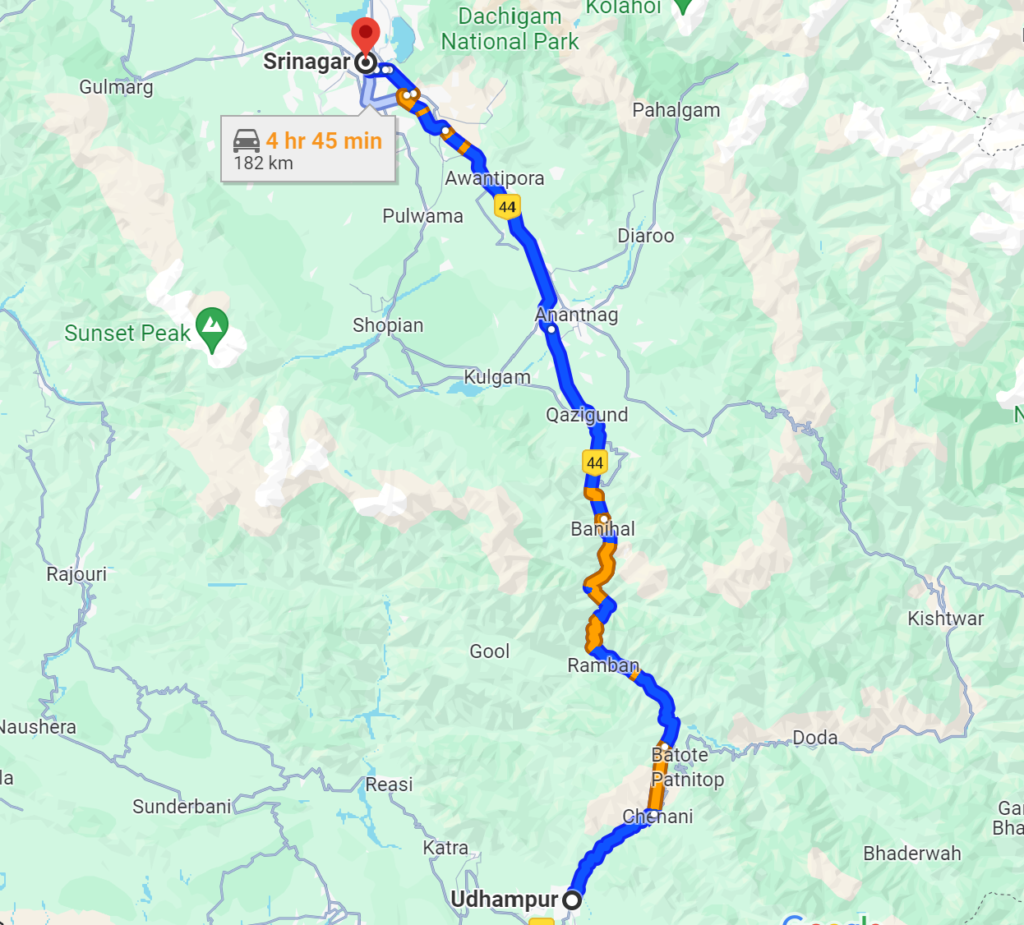
After a restorative night’s rest in Udhampur, we woke with a singular, driving focus: reaching the breathtaking heights of Sonamarg. To me, Sonamarg is far more than a mere geographical pin on a map; it is a gateway to the ancient Silk Route, a historic corridor that once connected empires. I often describe it as “Heaven on Earth,” a personal sanctuary defined by rolling alpine meadows, jagged peaks, and the rhythmic flow of glacial streams.
The journey from Udhampur to Sonamarg spans approximately 260 kilometers of winding mountain roads. Initially, the terrain treated us with unexpected kindness. We successfully navigated the notorious congestion of Banihal with surprising efficiency, surging through the mountain passes and crossing the tunnel well ahead of our projected schedule. The cool, crisp air fueled our spirits, making the ride feel effortless as we leaned into the curves.
Feeling triumphant, we decided to pull over for a celebratory lunch just 30 kilometers outside of Srinagar. We basked in our progress, convinced we were making record time and that the hardest part of the day was behind us. However, we were blissfully unaware of the irony of our situation. In the high Himalayas, God often laughs at your meticulously crafted plans just as you begin to feel truly confident. We didn’t realize that the calm of the afternoon was merely the prelude to a mechanical disaster that would soon bring our entire convoy to a grinding halt.
The Himalayan Refuses to Wake
After finishing our lunch, we geared up, snapped our helmets shut, and prepared to conquer the final stretch toward Srinagar. Five of us fired up our engines, the rhythmic thrum of the Royal Enfields filling the mountain air with a sense of purpose. But the sixth bike—a 2021 Himalayan 411—remained stone-dead.
The rider pressed the starter button repeatedly, his frustration growing with every click. Each time, we heard a pathetic, short engine groan followed by a deafening, pin-drop silence that felt heavier than the mountain itself. This bike was fairly new, a mirror image of my own, yet in a single moment, it had transformed into a useless, 200-kilogram paperweight. The owner mentioned a similar “glitch” in the past that had magically resolved itself, but we quickly realized the Himalayas rarely offer such mercy twice.
As a grueling hour passed, we poked at the wiring, prodded the battery terminals, and practically prayed for a spark, but the machine refused to respond. Our attempt to contact Road Side Assistance (RSA) yielded nothing but more bad news; since it was Sunday, every authorized workshop in the region remained shuttered and silent. RSA offered no immediate lifeline, leaving us to realize the gravity of our situation. We stood on the dusty shoulder of the road, officially stranded, watching the sun begin its slow descent while our primary mode of transport sat paralyzed and unresponsive.
Local Heroes and the “Pull the Bull” Strategy
As we stood stranded on the dusty shoulder of the highway, a group of local Kashmiri youths approached us with genuine concern. Two of them, clearly passionate about both motorcycles and the tradition of mountain hospitality, spent nearly an hour laboring over the bike to help us diagnose the elusive “electrical ghost” in the machine. While their mechanical interventions didn’t solve the problem, their selfless kindness left a lasting impression on our team. They even offered to assist us in reaching Srinagar, which loomed tantalizingly close, just a few kilometers away.
However, moving a Royal Enfield Himalayan is no small task; it is a heavy “Bull” in every sense of the word. While the stock bike weighs approximately 200 kilograms, adding metal panniers, spare fuel, and heavy expedition gear transforms it into a 250-kilogram beast. Dragging such a massive weight by hand on an incline was a physically impossible feat for anyone in our group.
With the light fading and our options exhausted, we decided on a risky maneuver in a moment of pure desperation: we would tow the dead Bull using one of the functional bikes. We scavenged a tow rope, tied it securely between the two Himalayans, and began a slow, nerve-wracking crawl toward the city. The tension was high, as towing a loaded adventure bike on a busy, narrow highway requires incredible precision and steady nerves to avoid a catastrophic wobble or a snapped line.
The Crash and the Miracle
Attempting to tow a massive adventure bike through unpredictable, active traffic is a certified recipe for disaster. We learned this lesson the hard way just a few kilometers into the maneuver. As we approached a busy, congested junction, the lead biker decelerated to navigate the chaotic flow of vehicles. Unfortunately, the rider on the trailing Himalayan—handicapped by a dead engine and a slackening rope—couldn’t bleed off his momentum fast enough.
The physics of the situation took over instantly; the bikes collided with a sickening thud, the tension caused the tow line to snap like a whip, and both riders crashed onto the asphalt in a tangled heap of metal, luggage, and dust. The suddenness of the impact left us breathless. In that terrifying split second, the sound of scraping metal against the road echoed the gravity of our mistake. We had underestimated the sheer difficulty of maintaining a safe distance while tethered, especially when navigating the erratic stops and starts of city outskirts traffic. It was a chaotic scene that could have ended far worse than it did.
The Final Explosion
Our fleeting sense of relief evaporated the moment we reached the congested heart of Srinagar. As if following a cruel script, the Himalayan sputtered and died once again—this time with a finality that felt permanent. To add insult to injury, as we rolled the dead machine to the curb, we discovered a jagged puncture in the rear tire, which was rapidly losing air.
With the sun dipping below the horizon and the bike now double-handicapped by a total electrical blackout and a flat tire, our journey hit a literal and metaphorical hard wall. The mechanical “ticking bomb” had finally detonated. We realized that pushing forward was no longer an option; we were stranded in the city with a crippled machine.
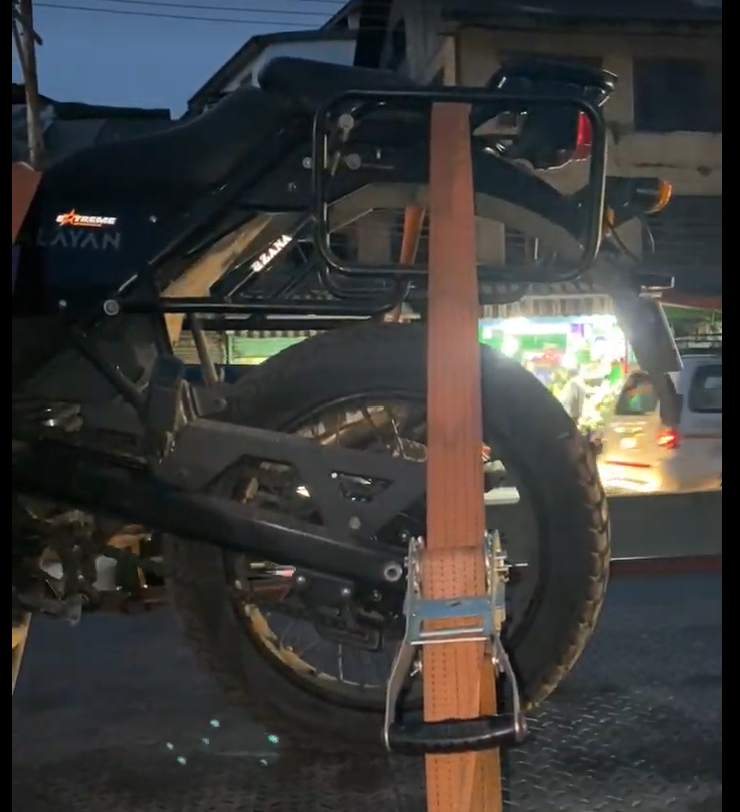
Defeated by the mounting complications, we conceded and checked into a nearby hotel. We contacted Roadside Assistance (RSA) for the second time that day, eventually securing an agreement to have the bike towed to the local authorized service center the following morning. This breakdown forced our entire seven-bike expedition into a frustrating stalemate, puting our ambitious itinerary on hold until at least the following afternoon. The delay felt like an eternity, as every hour spent in a workshop was an hour lost in the majestic mountains we had traveled so far to see.
A Night of Uneasy Rest
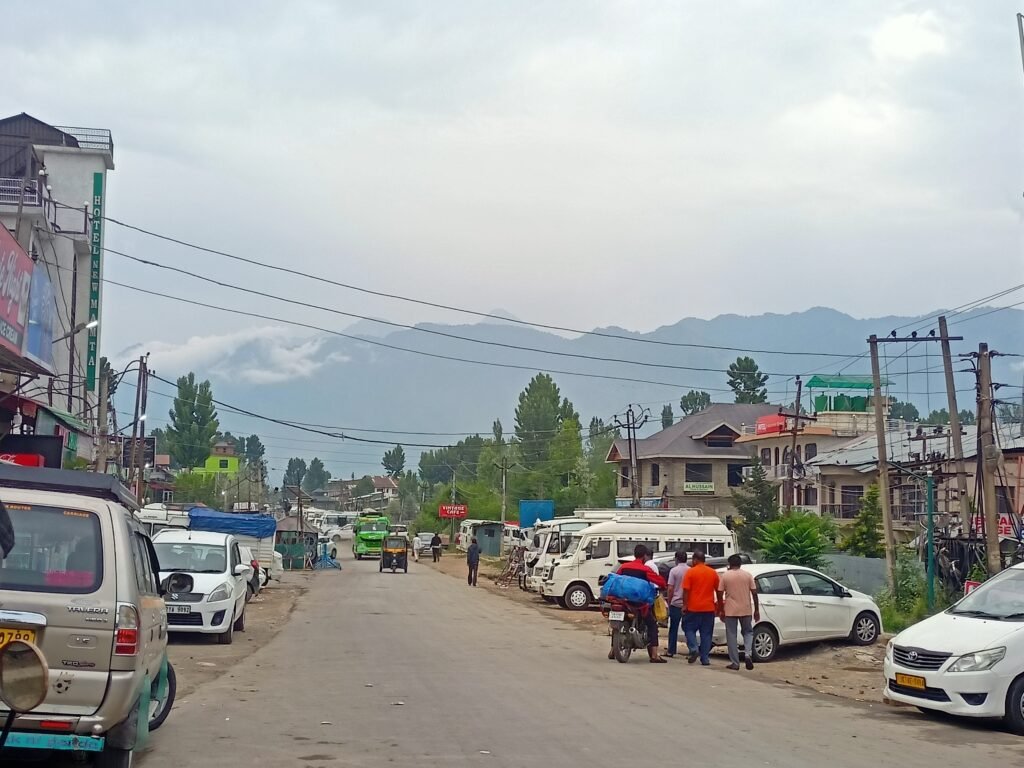
After a grueling day, we finally found refuge in a hotel near Lal Chowk, the bustling and historic heart of Srinagar. While the city’s vibrant energy usually feels welcoming, the hotel caretaker quickly tempered our relief with a sobering warning: the crowded streets were not safe for seven heavily loaded adventure bikes left out overnight.
Following his urgent direction, we maneuvered all seven machines into a tight formation directly in front of the gate of Hotel Sharjah. We squeezed them into the narrow entrance, ensuring they sat right under the unblinking eyes of the security cameras for maximum protection. The process was exhausting; we were physically spent, mentally frustrated, and deeply unsettled by the “ticking bomb” that was our friend’s unreliable Himalayan.
Even with the bikes somewhat secure, the weight of the day’s failures hung heavy over us. We lugged our essential gear to our rooms and collapsed into our beds without much conversation. Every muscle ached from the day’s towing mishaps and the stress of the city traffic. As we drifted off, we clung to a fading hope that Day 3 would bring a definitive “all-clear” from the mechanics, allowing our fractured expedition to finally regain its momentum and leave this mechanical nightmare behind.
Subscribe my youtube channel for stories of such adventurous trips – Subscribe
For latest travel plans and updates, follow me on Instagram – Follow
Follow this journey from the beginning – Ultimate journey to the land of sensation passes
Related Posts
LADAKH-ULTIMATE JOURNEY TO THE LAND OF SENSATIONAL PASSES
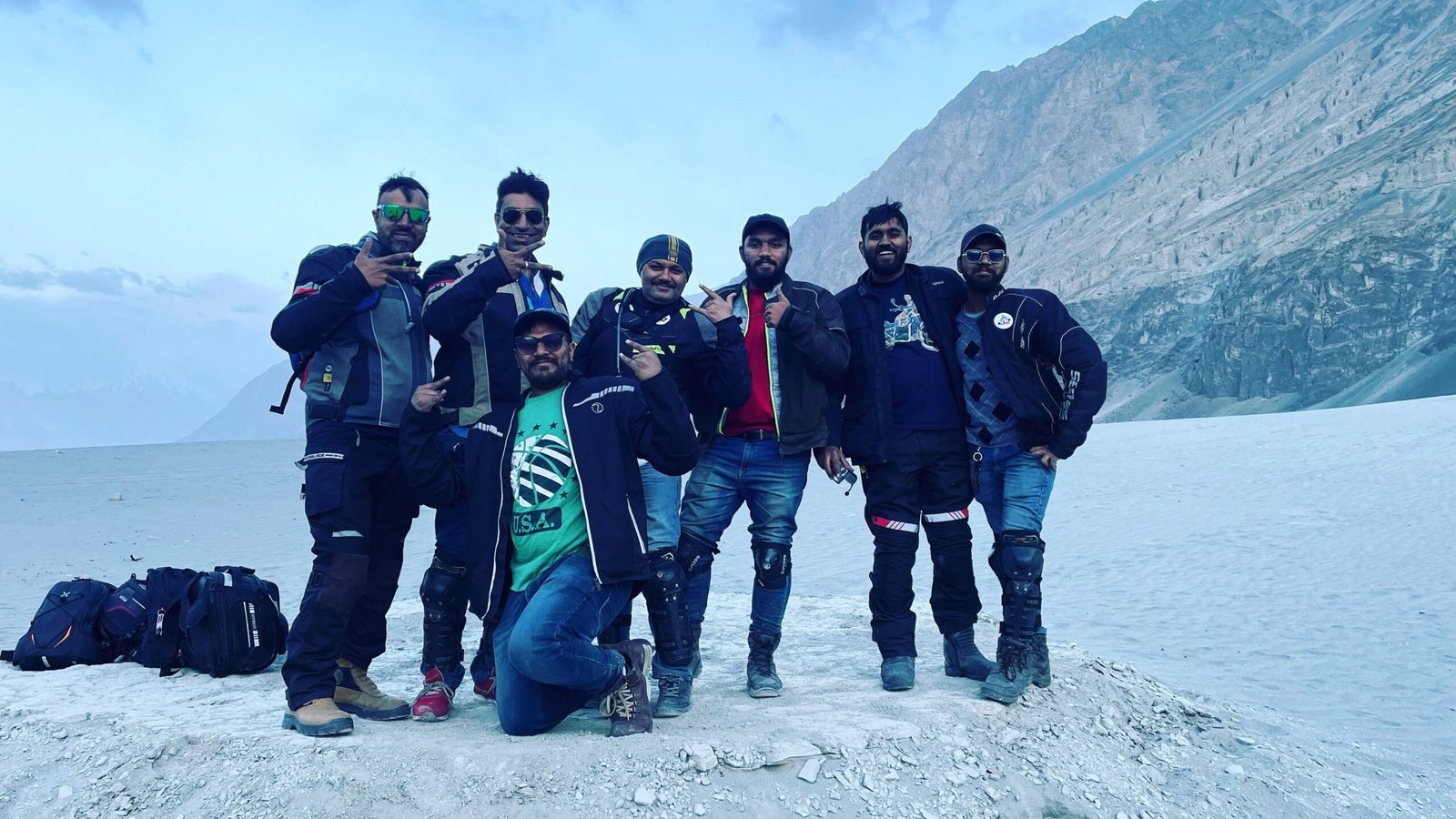
This story belongs to seven friends who first crossed paths…
ZANSKAR-THE HIDDEN INDIA-KARGIL TO PADUM
Welcome to the second blog of the Zanskar series, in…